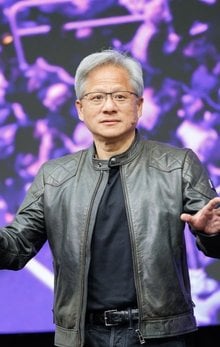
Jensen Huang Joins US-China Summit after Last-Minute Invite
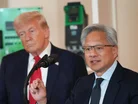
On 13 May, President Trump and an entourage of 17 US CEOs, including NVIDIA’s Jensen Huang, were welcomed in Beijing for the two-day business summit between the US and China. The group is preparing to meet President Xi to discuss economic and trade plans between the two nations.
President Trump is planning on striking several potential deals with President Xi during his visit, of which marks the first Chinese-state visit by a sitting US president in more than a decade.
The meeting was scheduled originally for October 2025 but was postponed due to the US involvement in the Israel-Iran war, a conflict President Trump is hoping China will help facilitate the end of, in addition to broader talks on trade.
Originally, 16 US CEOs including Apple CEO Tim Cook, SpaceX CEO Elon Musk and BlackRock CEO Larry Fink were invited to the summit, however despite the presence of several major US tech executives, NVIDIA CEO Jensen Huang wasn’t initially on the list of invitees.
Despite this, President Trump confirmed Jensen’s presence on board Air Force One during the group’s journey to Beijing on Truth Social.

Easing trade restrictions
Jensen joining the group of CEOs on the two-day summit marks a significant step for NVIDIA and both the US and Chinese economy.
Since the beginning of the AI boom, the NVIDIA CEO has been pushing for greater access to the Chinese market, of which he previously said in May 2025 could be a US$50bn opportunity.
A spokesperson for NVIDIA said: “Jensen is attending the summit at the invitation of President Trump to support America and the administration’s goals.”
The tech company successfully lobbied the Trump administration in December 2025 and managed to secure a deal that would see NVIDIA’s H200 AI chips shipped to China – a decision that saw the easing of US restrictions originally designed to avoid China accessing powerful US technologies.
US export controls have been a hot topic of discussion between Washington and Beijing, with limits on China’s ability to acquire US technology fuelling a stand off between the two economies last year, which in turn saw China impose curbs on shipments of rare earth materials to US customers.
US political pressures
Despite President Trump’s optimism over trade talks, a senior US official told reporters on 10 May that “there’s not a proposal out there for some massive investment” from China to the US, saying it “has not been on the negotiating table.”
Fallout from the Iran war has fueled pressure for President Trump to have a constructive dialogue on trade between the two countries.
While the Chinese economy has been affected by the conflict, compared to the US it has not suffered the same level of energy uncertainty. Unlike the US, China has vast oil reserves and a diverse energy supply, placing it in an economic advantage.
Additionally, President Xi isn’t facing the same level of political scrutiny that President Trump is, who is suffering a loss in party and voter support over areas like inflation increases brought on by the war.
Discussing China’s advantage, Liu Qian, Founder and CEO of Wusawa Advisory, says: “The Trump administration needs this meeting more than China does, as it needs to show to American voters that deals are signed, money is made.”
Company portals

Executives
Jensen Huang
Founder and CEO