John Chambers: 'Any Company Could Go Any Way' In AI Bubble
John Chambers, former CEO of Cisco, has said there will be “dramatic winners and spectacular train wrecks,” as a result of a potential AI bubble.
In an interview with Fortune, he said that while there are key similarities between the dot-com boom he led Cisco through – during a phase in which Cisco was briefly the most valuable company on Earth during a peak in March 2000 – there are also key differences.
“AI will change the way we work, live, learn and play, just like the internet did, and it will drive productivity for the next decade and the decade after that,” he says.
However, unlike the dot-com boom, John adds it is harder for companies to “sneak up on” larger players, as Cisco did to IBM.
He tells Fortune: “The Magnificent Seven are all investing big time in AI and investing fast. Nobody is sneaking up on anybody. Microsoft led early on, then Google, now Anthropic probably has the most momentum. Any company could go any way.”
Is AI ‘bigger than the internet?’
It’s not just Cisco’s former CEO who thinks AI will play a key role in reshaping businesses.
Speaking to the BBC at the World Economic Forum in Davos, Chuck Robbins – who took over from John as CEO of Cisco in 2015 – said that he believes AI will be “bigger than the internet,” with those who fail to adapt likely to struggle to remain competitive.
Cisco has been implementing AI throughout its operations and has deployed services to address key AI cybersecurity risks – including Cisco AI Defence and Hypershield, which are designed to counter AI-led cyber attacks.
The development of these products has unlocked significant value for Cisco, with the coming taking in US$350m in AI infrastructure orders from hyperscalers in its second quarter alone.
For fiscal 2026, it expects to receive over US$5bn in AI infrastructure orders and recognise approximately US$3bn in AI infrastructure revenue from these hyperscalers.
Are we in an AI bubble?
The concept of an AI bubble – meaning that valuations are outpacing revenue and proven business models – is a subject of significant debate.
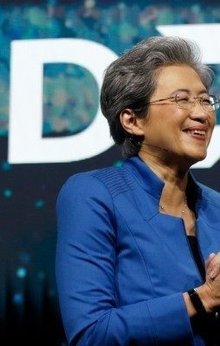
Lisa SU, CEO of AMD, has said that she believes the concept of an AI bubble is “completely wrong,” telling Business Insider: “AI will fundamentally change everything over the next five years.”
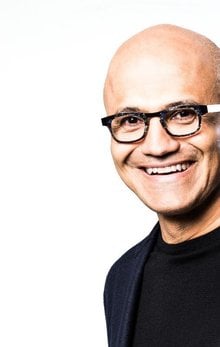
Meanwhile Satya Nadella, CEO of Microsoft, has expressed some concerns, sharing at the World Economic Forum in Davos: “For this not to be a bubble, by definition it requires that the benefits of this are more easily spread.
"To me, a long term, scalable solution is to have all of these token factories part of the real economy connected to the grid, connected to the telco network – and that's what will drive that scale, whether it's in the Global South or in the developed world."
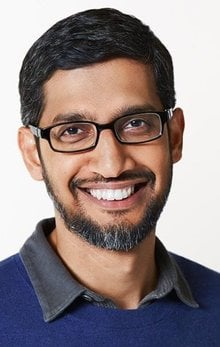
If the AI bubble does burst, Sundar Pichai, CEO of Alphabet, has told the BBC that he believes “no company is going to be immune.”
He said: “We can look back at the internet right now. There was clearly a lot of excess investment, but none of us would question whether the internet was profound.”
“I expect AI to be the same. So I think it's both rational and there are elements of irrationality through a moment like this.”
Company portals




Executives
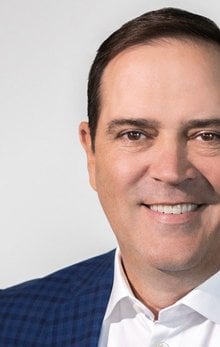
Chuck Robbins
Chair and CEO
Lisa Su
Chair & CEO
Satya Nadella
Chairman and CEO
Sundar Pichai
CEO