NVIDIA Q1 2026 Revenue Exceeds Expectations Amid AI Boom

On 20 May, NVIDIA exceeded Wall Street’s expectations for growth during the company’s announced Q1 2026 results.
The company announced it had a reported net income of US$58.32bn or US$2.39 per share in the February-April period, up from US$18.78bn or US$0.76 cents per share in the same period in 2025.
Revenue rose 85% to US$81.62bn from US$44.01bn.
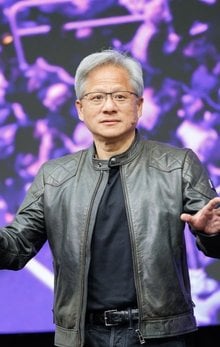
“The buildout of AI factories – the largest infrastructure expansion in human history – is accelerating at extraordinary speed,” said Nvidia’s CEO, Jensen Huang, in a statement.
“Agentic AI has arrived, doing productive work, generating real value, and scaling rapidly across companies and industries.”
NVIDIA is currently the world’s most valuable company by market capitalisation, with a US$5.4tn market cap, has cornered the semiconductor chip market and has heavily invested into the tech industry amid the AI boom by providing key components, software and infrastructure to large global companies like Amazon, Microsoft and Alphabet.

The biggest player in CPU development
Several US tech giants are collectively planning to invest approximately US$750bn this year on AI infrastructure, a significant portion of which will go towards AI chips for data centres.
Jensen says he expects NVIDIA would grow faster than the capital expenditure of hyper-scaled data centres.
A large portion of NVIDIA’s revenue comes from its data centres, with the company reporting 92% year-on-year growth for this area of the business, resulting in a record revenue of US$75.2bn.
The company is facing some competition in producing chips from other tech giants like Amazon and Google but NVIDIA still ranks as the most profitable semiconductor company in the world.
Discussing NVIDIA’s competitions, Ben Barringer, Head of Technology Research at Quilter Cheviot, says: "While NVIDIA focuses primarily on GPUs, it remains the biggest player in CPUs (Central Processing Units), dwarfing AMD and Intel with $20bn of sales in CPU.”
International trade strategies
On 13 May, Jensen joined President Trump and several other US CEOs on a trip to China as part of a plan to discuss economic and trade strategies between the two nations.
Jensen has previously expressed interest in expanding NVIDIA’s operations in China, but it is currently unclear whether Chinese officials will agree to use American technology.
In December 2025, the Trump administration allowed NVIDIA to ship H200 AI chips to China, with the US collecting a 25% fee on each sale.
“The Chinese government has to decide: how much of their local market do they want to protect?”, Jensen said in an interview with Bloomberg on 18 May. “My sense is that over time the market will open.”
NVIDIA stated amid the revenue results announcement that it was not currently expecting data centre compute revenue from China.
During an earnings call on 20 May, NVIDIA CFO Colette Kress, said the company hasn’t generated any revenue from sales of its chips to China and that it remains unclear whether any imports will be allowed into the country.
The company’s chip sales have subsequently remained in limbo. President Trump has approved sales of the chips in China but said that Xi Jinping had blocked them.
Despite the company’s unsuccessful attempts to expand into China, NVIDIA’s new AI system, Vera Rubin, is expected to roll out in the second half of 2026. The company says the AI platform will serve as a “generational leap” that’s going to create “the greatest infrastructure buildout in history”.
“My sense is we will be supply-constrained throughout the entire life of Vera Rubin,” Huang added on the earnings call.
Company portals

Executives

Ben Barringer
Head of Technology Research
Jensen Huang
Founder and CEO