
Palo Alto CEO: 90% of Enterprise Employees aren’t AI savvy

Nikesh Arora, CEO of Palo Alto Networks, says modern enterprise workforces aren’t equipped with the skills necessary to navigate the AI revolution.
Speaking on an episode of the 20VC podcast, Nikesh said that 90% of enterprise employees “are not AI savvy”.
He said that the issue surrounding the disconnect between the technology and employee skills was down to the lack of training courses available.
Nikesh added that his 21,000-employee workforce is responsible for their own development, adding that he believes industries are having a “Darwinian moment” where companies have to “figure out who's really good”.
Discussing other enterprises, he added that many firms are opting for mass layoffs as opposed to addressing the AI skills gap, directly addressing major companies like SoftBank, Coinbase and Block, who have previously cited AI as a reason for job cuts.

Natural attrition instead of layoffs
He went on to discuss the actions of Coinbase CEO Brian Armstrong and Block CEO Jack Dorsey, criticising their approach to workforce management as AI automation becomes more commonplace.
He said companies like these have reduced their headcount drastically “because they've figured out there’s no redemption”.
“They say, ‘I can’t train these people. I'm going to just find the people who are going to come in and help me do this stuff."
Nikesh described Palo Alto’s approach to the AI skills gap, saying instead of opting for mass layoffs, the firm is using natural attrition to gradually replace workers over time.
He also explained that the firm had been hiring people for technical roles via hackathons and that he estimates within 12 months, Nikesh will have transformed 20% to 25% of his entire team.
“Give me three years, I'll have hopefully enough AI savvy people working at Palo Alto,” he said.
Reflecting Nikesh’s optimism over the future of Palo Alto’s workforce, the firm has seen considerable growth within the last few months alone.
The company added 5,423 total employees to its headcount at the end of fiscal 2025 to Q3 2026, according to its most recent 10-Q filing.
- Palo Alto Networks plans on transforming 20%-25% of its workforce within 12 months
- Palo Alto Networks hired 5,423 employees from the end of fiscal 2025 to the third quarter of 2026
- Palo Alto Networks currently employs approximately 21,000 workers
Give me three years, I'll have hopefully enough AI savvy people working at Palo Alto."
Nikesh’s rule of thumb for workforce changes
Despite Nikesh’s championing of enhancing the workforce, he admits AI will likely determine the direction of workforce growth, even if it means reducing headcount.
He questioned why the company needs hundreds of employees within certain departments, citing marketing as an example. He added that frontier models can already be used to train alongside marketing strategies to understand the company’s voice.
“My biggest problem in marketing is I have 600 people, but I'm not sure they all fully understand how to consistently deliver my tone of voice,” Nikesh said.
He went on to say his “rule of thumb” is that within the next three years, companies will likely have “half of the people” in roles like marketing, HR and finance, explaining that AI applications will be so advanced that they can automate the work of these departments.
During the 20VC podcast, he said that he already has employees who want to use AI resources to enhance the firm’s marketing and HR departments.
“I think there's this fallacy people believe we're going to have less people working because AI is going to take over our jobs,” Nikesh said.
“I don't believe that. I think what's going to happen is you can't imagine the number of people on my team who want more technical resources, more AI-savvy resources because they want to do exactly these things.”
Company portals

Executives
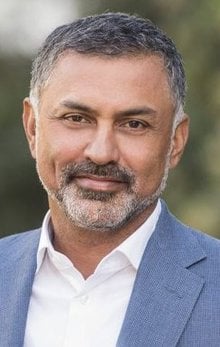
Nikesh Arora
Chairman CEO