Should Leaders Be Worried About Deepfake AI Tools?
Artificial intelligence systems that generate synthetic voice, images and video are increasingly used in business, from customer service to marketing. However, this technology raises questions about authenticity, consent and potential misuse.
These debates are prominent in the entertainment industry, where actors are pushing back against AI recreating their performances without permission.
AI models are trained on large datasets of human performances to generate realistic new content. What began as academic research has rapidly commercialised, offering cost savings but also provoking resistance from those who object to unauthorised synthetic recreations.
AI actors and intellectual property
The debate intensifies with Tilly Norwood, an "AI actor" created by Dutch comedian Eline Van der Velden, who hoped Tilly could be the “next Scarlett Johansson”.
SAG-Aftra, the US actors' union, responds swiftly. “It’s not an actor, it’s a character generated by a computer programme that was trained on the work of countless professional performers,” SAG-Aftra states.
The union adds that such a creation has "no life experience to draw from, no emotion" and that audiences are not interested in content "untethered from the human experience”.
A key issue is training data. Many AI systems learn from copyrighted material, leading to lawsuits against companies like OpenAI and Stability AI from creators alleging their work was used without permission.
Van der Velden defends her work as art. “She is not a replacement for a human being, but a creative work... Like many forms of art before her, she sparks conversation.”
Navigating the unregulated landscape
The lack of a clear legal framework creates uncertainty for business leaders, as regulations have not kept pace with AI.
The EU’s AI Act mandates disclosure of synthetic media, but specifics are still being determined. In the US, some states have personality rights laws, but enforcement is inconsistent. China requires watermarking, but compliance varies. No global standard exists.

This regulatory vacuum presents direct risks for businesses. “It's freely available to someone with very little technical skill to copy a voice, image or even a video,” Arup's CIO, Rob Greig, warns, highlighting the potential for fraud and reputational damage.
Businesses face key decisions, such as whether to disclose AI use in customer service. While some social media platforms label AI content, implementation is patchy and business platforms like LinkedIn lack clear policies.
The human cost of unauthorised recreation
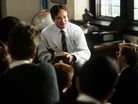
The ethical dilemma is sharpest when recreating deceased individuals. Zelda Williams, daughter of Robin Williams, has experienced this directly, finding attempts to recreate her father’s voice “personally disturbing”.
She reiterates her position on social media, asking people to stop sending her AI videos of her father. “To watch the legacies of real people be condensed down to ‘this vaguely looks and sounds like them so that’s enough’, just so other people can churn out horrible TikTok slop puppeteering them is maddening,” she writes.
Zelda’s critique also challenges the industry’s framing of the technology. “Stop calling it ‘the future,’” she writes. “AI is just badly recycling and regurgitating the past to be re-consumed. It’s a waste of time and energy – and believe me, it’s NOT what he’d want.”
This perspective highlights a backlash against AI not as innovation, but as an erosion of human experience and creative integrity.