
Warren Buffet Hands Over Berkshire’s Reins to CEO Greg Abel
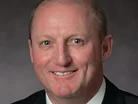
When Greg Abel officially took the helm at Berkshire Hathaway on 1 January, the long-planned transitional from 95-year-old Warren Buffet was finally complete.
Almost immediately, the company signalled its confidence in the new CEO. On the same day, Berkshire lifted its annual cash salary to US$25m, according to a filing with the US Securities and Exchange Commission.
The raise marked a step up from the US$21m Greg earned in 2024 as Vice Chairman of Berkshire’s non-insurance operations, a role he held before becoming the Chief. That compensation also includes US$17,250 in “all other compensation”, according to regulatory filings.
In comparison, Warren’s own pay during his final year as CEO, a role he occupied for nearly 60 years, remained US$100,000 plus US$305,111 in other compensation, according to CNBC.
Who is Greg Abel?
Greg arrives in the top job with years of operational responsibility behind him. In 2018, he was appointed Vice Chairman of Berkshire Hathaway’s non-insurance operations, overseeing a vast portfolio of companies.
In this role, he was already deeply involved in the conglomerate’s day-to-day decision making.
His promotion has long been in the pipeline. Warren confirmed Greg as his successor in May 2021, telling CNBC that “if something were to happen to me tonight, it would be Greg who’d take over tomorrow morning”.
The legendary CEO has publicly shown his support for his successor. Speaking to CNBC’s Becky Quick in May 2025, the world-renowned investor said he would rather have Greg handle his money “than any of the top investment advisors or any of the top CEOs in the United States”.
He underscored that confidence, adding: “It is a huge endorsement, but it’s an endorsement we’ve made.”
Warren’s faith in his successor
That endorsement was expanded upon in Warren’s farewell letter to shareholders, written after announcing he would step down at the end of 2025.
In the November letter, he said Greg had “more than met” the expectations he formed when he “first thought he should be Berkshire’s next CEO”.
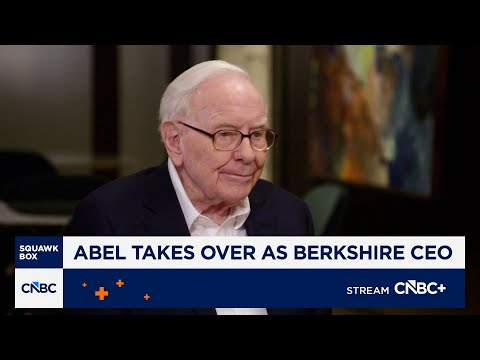
Warren praised Greg’s grasp of both people and operations, writing that Greg understands the business and personnel “far better” than himself does now.
“He is a very fast learner about matters many CEOs don’t even consider,” he added. “I can’t think of a CEO, a management consultant, an academic, a member of government – you name it – that I would select over Greg to handle your savings and mine.”
For example, Warren shared that the incoming Chief knows “far more about the upside potential and the dangers of our P/C insurance business” than many long-time execs.
Greg has already promised continuity. Addressing shareholders at the time of the succession announcement, he said he would “maintain the reputation of Berkshire” and added: “Really, it will not change. And it’s the approach we’ll take as we go forward.”
Warren’s final year at the helm
Berkshire's long-time leader spent his last year as CEO staying true to the approach that defined his six-decade tenure. In a period marked by record high stocks, Berkshire sold more stocks than it bought and allowed its cash reserves to grow substantially.
By the end of 2025, Berkshire’s held cash had reached a record US$358bn, according to the Wall Street Journal, and the company had sold US$10bn more in stocks than it purchased in the first nine months of the year.
Discussing the leadership transition, according to the WSJ, President and Chief Investment Officer of Semper Augustus Investments Group Chris Bloomstran said: “Warren exits in his final years having invested the same ways he did for six decades: patiently opportunistic and never placing the company in harm’s way.”
With Warren “going quiet”, according to his final shareholder letter, Berkshire enters its next chapter grounded in the confidence of its most famous steward.
Company portals

Executives
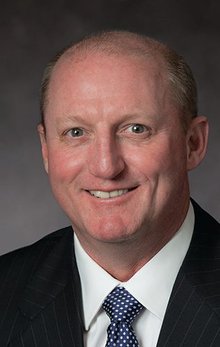
Greg Abel
CEO
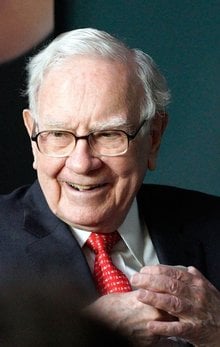
Warren Buffet
Former CEO