WEF: Jamie Dimon Warns Credit Card Cap Risks Economic Slump
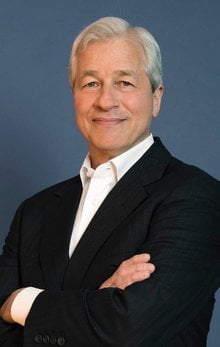
JPMorgan Chase CEO Jamie Dimon has warned that President Donals Trump's proposal to cap US credit card interest rates could have significant economic consequences, saying it would sharply reduce access to credit for many Americans.
Speaking at the World Economic Forum (WEF) in Davos, Jamie addressed Trump's suggestion that credit card interest rates should be capped at 10% for one year from 20 January 2026.
"It would be a disaster," Jamie told British journalist Zanny Minton Beddoes, "and I'm not making that up because our business, we would survive it."
He added that a cap a would be "drastic" and would "remove credit from 80% of Americans and that is their back up credit".
Trump outlined the proposal earlier this month in a post on his Truth Social platform, calling for a one-year limit on interest rates. He wrote: "Effective January 20, 2026, I, as President of the United States, am calling for a one year cap on Credit Card Interest Rates of 10%.
"Please be informed that we will no longer let the American public be 'ripped off' by Credit Card Companies." But he did not specify whether this cap would require new legislation.
Potential impact beyond the banking sector
Jamie said that the effects of an interest rate cap would extend beyond banks and card issuers. He said: "The people crying the most won't be the credit card companies.
"It will be the restaurants, the retailers, the travel companies, the schools, the municipalities because people will miss their water payments, their this payment and their that payment."
Industry analysts have echoed concerns that banks would respond to a lower lending rate by reducing credit limits, closing higher-risk accounts and scaling back rewards programmes, as lower returns would make it harder to offset potential losses.
Asked about political backing for the proposal, Jamie suggested it could be tested on a limited basis. "I think we should test it," he said. "The government can do it, they should force all the banks to do it in two states, Vermont and Massachusetts, and see what happens."
At Trump's talk at Davos, he reiterated his opinion, stating: "I am asking Congress to cap credit card interest rates at 10% for one year." He argued that rising credit card debt had become a barrier to saving, adding that "the profit margin for credit card companies now exceed 50%".

The wider context
Trump's initial comments unsettled investors in credit card firms including American Express, Visa and Mastercard, while shares in the UK-based Barclays also dipped.
Jamie said that other banks planned to provide further analysis to policymakers on the potential effects of the proposal. The CEO said: "We're going to give them at one point real analysis on the effects of this", adding that so far only limited information had been shared.
His comments at Davos also follow public remarks in 2025 on Trump administration policies. In October, he addressed the President's increase in H-1B visa application fees, saying he supported "merit-based" immigration but that the move had "caught everyone off guard" for employers that rely on international talent.
The credit card debate highlights the ongoing exchange between policymakers and business leaders over measures intended to address cost-of-living pressures.
While Trump has framed the proposed cap as consumer relief, banks continue to warn that changes to pricing could affect access to credit, setting the stage for further discussion as the proposal is considered.
Company portals

Executives
Jamie Dimon
Chairman of the Board