
What are Tech CEOs Saying About the Future of Work?

Big tech companies are no longer cutting jobs simply for efficiency. Instead, CEOs are making high-stakes bets on artificial intelligence, reducing workforces to fund a sweeping transition that could reshape how their companies operate.
From industry giants like Amazon and Meta to specialised firms like Block, a sector-wide pattern has emerged. Company leaders are shrinking their teams to fuel AI-driven operations, with some executives openly questioning whether their own roles might eventually be automated.

Leaders justify workforce reductions
The justification for job cuts has shifted dramatically. Where executives once blamed "too many management layers", today's reasoning is more direct.
Meta CEO Mark Zuckerberg said: "I think that 2026 is going to be the year that AI starts to dramatically change the way that we work."
Since that statement, he has overseen cuts of hundreds of positions while simultaneously doubling his company's AI spending.
Jack Dorsey, CEO of the fintech firm Block, recently announced plans to shed almost half of his company's workforce. His reasoning was blunt: "Intelligence tools have changed what it means to build and run a company. A significantly smaller team, using the tools we're building, can do more and do it better."
The US$650bn infrastructure bill
Beyond productivity gains, CEOs face a more pressing financial reality: the staggering cost of AI infrastructure.
The big four – Amazon, Google, Meta and Microsoft – are projected to pour US$650bn into AI investments this year alone, according to the BBC. To balance the scales and appease investors, company leaders are looking at payroll as a way to offset these massive expenditures.
Amazon plans to spend US$200bn on AI this year. To offset this, the company has cut approximately 30,000 corporate roles since October. While laying off staff might only provide a fraction of the cash needed for a multi-billion-dollar AI bill, it demonstrates to shareholders that executives aren't simply writing blank cheques.
AI tools are moving past the experimental phase. They are becoming capable enough to handle complex tasks that previously required human workers, giving CEOs confidence to reduce headcount while maintaining or improving output.
Executive turnover accelerates
Perhaps the most surprising trend is that these cuts are moving up the corporate ladder, with CEO positions themselves under scrutiny.
Anthropic CEO Dario Amodei suggests AI could replace 50% of the white-collar workforce. "If we look at jobs like entry-level white, you know, I think of people who work at law firms, like first-year associates, there's a lot of document review," Dario said in May 2025. "It's very repetitive, but every example is different. That's something that AI is quite good at."
"I think, to be honest, a large fraction of them would like to be able to use it to cut costs to employ less people."
In 2024, AI was cited as a factor in over 54,000 layoffs. Simultaneously, CEO turnover hit a 15-year high. Leaders like Adobe's Shantanu Narayen have stepped down, citing the need for new leadership to navigate the AI transition.
Even OpenAI's Sam Altman has mused about his own eventual replacement. In an interview with the MD MEETS podcast, he said: "I think there will come a time when AI can be a much better CEO of OpenAI than me – and I will be nothing but enthusiastic the day that happens."
Dirk Jenter, Professor of Finance at the London School of Economics and Political Science, suggests CEOs are leaving because investors believe some CEOs can't deliver on promises offered by AI.
"Investors are not necessarily super patient," he says. "They see billions being spent on AI investments, and they see sort of very little in short-term return on investment, and that puts a lot of pressure on company leadership."









Executives

Dario Amodei
CEO and Co-Founder
Dirk Jenter
Professor of Finance at The London School of Economics and Political Science (LSE)

Jack Dorsey
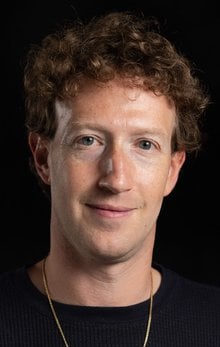
Mark Zuckerberg
CEO

Sam Altman
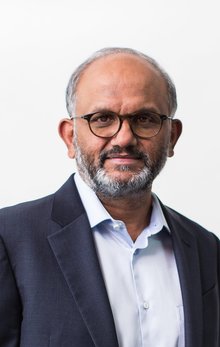
Shantanu Narayen
CEO