What do CEOs Think About AI’s Threat to Jobs?

Execs can’t decide whether AI will benefit their workforce or cause job losses.
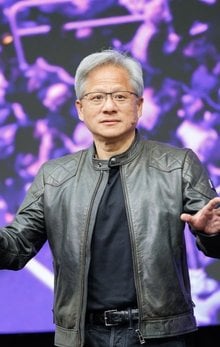
Take Nvidia CEO Jensen Huang for example. He has repeatedly said in the press that “many new jobs will be created” by AI.
Dario Amodei, Anthropic CEO, warned earlier in the year that AI tools that Anthropic and other companies are racing to build could eliminate half of entry-level, white-collar jobs and increase unemployment by 20% in the next five years, according to CNN.
Despite this, Forbes Research’s 2025 AI Survey, shows global execs are favouring a slightly more positive outlook.
The survey, which includes responses from more than 1,000 C-suite leaders on AI adoption, including the impact it will have on their workforce, shows that 94% predict fewer than 5% of jobs will be eliminated over the next two years.
Over half of respondents (59%) agree with Nvidia's CEO and say AI will ultimately create rather than eliminate job opportunities. Forbes says this is an increase from 33% in 2024.
Executives on AI
According to Forbes, one exec said that their most significant challenge is “helping employees trust and adapt to new tools without fearing job loss”, with another saying that “cultural change takes time, and fear of job loss affects involvement”.
To solve these concerns, 68% of the leaders in the survey said their organisations have a clear strategy to shift the AI narrative from job replacement to human-AI collaboration.
At a press conference in September at Walmart’s Bentonville headquarters, Doug McMillon, Walmart’s CEO, said: “It’s very clear AI is going to change literally every job.”
Much like the respondents in the survey, he is finding ways to navigate the collaboration between workforce and technology: “I think the way for us all to approach it, especially here at Walmart, is just in a very transparent, honest, straightforward way, talking to people in real time about what we’re learning and what we’re doing and why we’re doing this.”
Doug told the Associated Press at the conference that this will keep employees invested in the company and “optimistic about what the future of what their life can look like” through new tools that are “making their jobs better”.

According to Business Insider, the CEO of LinkedIn, Ryan Roslansky, said in an informal chat that adapting to AI will become increasingly more important to securing jobs - the most likely to get hired will be “adaptable, forward-thinking, ready to learn and ready to embrace these tools”.
He emphasised that AI-savvy talent will survive the increase of AI, whereas degrees will no longer be the secret to reaching six-figure salaries.
Preparing the workforce
The Forbes study reveals that 44% of Chief Human Resources Officers have already transitioned employees from non-AI roles to AI-related positions.
However, many acknowledge that this will require new skills, so more than half of companies are addressing this through training programmes and mentorship and career growth initiatives.
Senior leaders at cloud-based workforce management platform Workday has spearheaded a programme designed to overcome AI adoption barriers called ‘Everyday AI’.
It encourages Workday employers to use and experiment with AI tools and openly discuss how AI is already being used and how it could be incorporated into their job role further.
Speaking with HR Brew, Ashley Goldsmith, Workday’s Chief People Officer (CPO), praised the programme’s successes in September, saying it had resulted in “huge adoption and real enthusiasm” within the business.
Where an employee may be more heavily affected by AI implementation depends heavily on the department they work in, says Forbes.
When asked where AI is currently being used the most to drive decision-making and create transformative experiences, 69% of leaders say they use it in IT infrastructure and tech, 3% say they use it in HR operations and 2% in legal.





Executives

Dario Amodei
CEO and Co-Founder
Doug McMillon
President & CEO
Jensen Huang
Founder and CEO
Ryan Roslansky
Executive Vice President