What is Bosch CEO's Strategy to Recover From 'Painful' 2025?
Bosch reported a slight increase in preliminary sales revenue to US$107bn for 2025, up from US$106bn in the previous year.
Despite this growth, the EBIT margin from operations sat at approximately 2%, well below expectations.
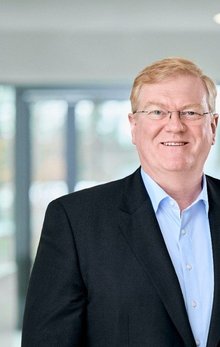
Stefan Hartung, Chairman of the Board of Management and CEO of Robert Bosch GmbH, described the year as difficult and painful, citing a weak economic environment and challenging market conditions as the primary reasons for the sluggish performance.
To remain financially independent, the company is targeting annual sales growth of 6 to 8% with a 7% margin.
Streamlining organisation for long term security
The company is currently undergoing a significant restructuring process to ensure it remains economically robust.
This includes thousands of job losses and structural adjustments aimed at narrowing the cost gap. Bosch now anticipates achieving its target margin of 7% in 2027 at the earliest.
"In an unfavourable environment, we are continuing to work systematically on our growth strategy, which also requires us to strengthen our competitiveness," said Stefan, who highlighted that the firm is weighing every investment more carefully while focusing on material costs and productivity.

Pioneering 140 years of technical excellence
-
1886: Robert Bosch opens the "Workshop for Precision Mechanics and Electrical Engineering" in Stuttgart
-
1902: The company patents the high-voltage magneto ignition system with a spark plug
-
1906: Bosch establishes its first sales office in the US
-
1978: The firm launches the first electronic anti-lock braking system (ABS) for passenger cars
-
2021: Bosch opens its first fully automated semiconductor wafer fab in Dresden.
Focusing on North American market expansion
North America has emerged as a bright spot for the firm, with sales increasing by 8% year-over-year to US$18.7bn.
The company plans to celebrate its 120-year anniversary in the US in 2026. This focus includes high-value jobs in engineering, software and research across 20 manufacturing locations.
"Our dedicated associates across North America continue to focus on profitable growth and delivering quality products and services to our customers," said Paul Thomas, President of Bosch in North America and President of Bosch Mobility, Americas.
Paul added that the business is poised for continued growth supported by local investments.
Innovations in software-driven vehicle motion
Bosch sees significant opportunities in software-driven mobility, particularly in the coming decade. Its Vehicle Motion Management software, which coordinates brakes, steering and powertrain dynamics, has already seen positive market reception.
The company is also expanding its presence in the HVAC sector, aiming to nearly double Home Comfort sales to US$9.4bn.
Stefan said innovations like AI-enabled high-performance computers for car cockpits are central to the company’s "innovation offensive". This strategy involves launching around 2,000 new products in the Power Tools division by 2027 to reduce time to market.
All sustainability, net zero and sustainable supply chain leaders should attend:
- Sustainability LIVE: The Net Zero Summit - QEII Centre, London, March 4-5
- Sustainability LIVE: The US Summit - Navy Pier, Chicago, April 21-22
Co-located with Procurement & Supply Chain LIVE, these events brings together CSOs, ESG leaders and senior decision-makers at a moment when sustainability, supply chains and commercial performance are increasingly interconnected.
Tickets can be booked online today for The Net Zero Summit and The US Summit. Group discounts available.
Overcoming scepticism toward technological progress
Regarding regional competitiveness, Stefan expressed concern over growing technological scepticism in Europe.
He called on policymakers to engage with new fields like hydrogen and AI with greater decisiveness to survive global competition. "The only way a country, a society, can survive in global competition is if there is at least sufficient will to make technological progress," He said.
Company portals

Executives
Stefan Hartung
Chairman of the Board of Management