Top 10: CEOs in Global Manufacturing
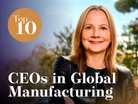
In an era defined by electrification, digitisation and scalable innovation, the world’s leading manufacturing executives are redefining industrial excellence.
From aircraft and automotives to semiconductors and smart devices, these leaders drive transformation through resilient supply chains, sustainable production and intelligent design.
They are spearheading advancements in hydrogen propulsion, battery technology, AI and robotics, while reimagining traditional assembly lines into connected, data-led ecosystems.
Whether pioneering circular economies or championing vertical integration, each executive leads global teams delivering precision, performance and next-generation manufacturing leadership on an unprecedented scale.
These leaders have made their way into Business Chief’s Top 10 CEOs in global manufacturing.
10. R. Adam Norwitt
Company: Amphenol
Revenue: US$15.22bn
Location: Connecticut, North America
Serving as Amphenol’s CEO since 2008, R. Adam oversees production of advanced connectors and sensors across worldwide facilities.
His experience, including serving as the firm’s Chief Operating Officer, drive decentralised excellence, fostering innovation and efficiency in diverse markets.
Amid surging AI and data-centre demand, the leader’s strategies deliver record sales and earnings, including reporting record sales of US$6.2bn in Q3 of 2025 - a 53% increase compared to Q3 2024. This AI-led growth solidifies Amphenol’s leadership in interconnect solutions.
9. Lip-Bu Tan
Company: Intel
Revenue: US$53.1bn
Location: California, North America
Intel’s CEO drives global manufacturing expansion through the IDM 2.0 strategy, investing billions in new US and European fabs to boost foundry capacity. This reduces reliance on Asian production while meeting surging AI and computing demands.
Leveraging US government subsidies like the CHIPS Act, Lip-Bu fosters partnerships with AWS, Microsoft and others.
These efforts enhance supply chain resilience, scale advanced nodes and position Intel as a leading foundry for diverse semiconductor needs worldwide.
8. Kelly Ortberg
Company: Boeing
Revenue: US$66.52bn
Location: Virginia, North America
In the top seat, Kelly oversees production of key aircraft like the 787 Dreamliner and 737 MAX. These planes' output and deliveries signal the health of industry-wide supply chains and manufacturing stability.
Appointed in August 2024 with over 35 years of aerospace expertise, he manages 170,000 employees across more than 150 countries.
Kelly focuses on safety, quality, efficiency and innovation to strengthen Boeing's leadership in commercial aviation and defense.
7. Guillaume Faury
Company: Airbus
Revenue: US$81.24bn
Location: Toulouse, France
Leading one of the world's two dominant commercial aircraft manufacturers, Guillaume drives ramped-up production to tackle a massive order backlog while steering pivotal technology decisions in aviation manufacturing.
As CEO since 2019, he oversees final assembly lines and supply chains across global sites, boosting output of the A320, A350 and A220 families to meet surging demand post-pandemic.
He champions hydrogen-powered aircraft, digital twins and advanced materials, restructuring manufacturing for efficiency and sustainability in next-gen aviation.
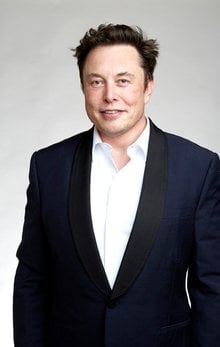
6. Elon Musk
Company: Tesla
Revenue: US$97.69bn
Location: Texas, North America
Tesla's CEO oversees a vast network of gigafactories across North America, China, Germany and other regions, enabling large-scale production of EVs and advanced batteries.
Through pioneering vertical integration - from in-house battery cell manufacturing and massive Giga Presses to software and assembly - costs are reduced, supply chain risks minimised and output accelerated for EVs, energy storage systems like Powerwall and solar products.
Elon’s strategic factory footprint and self-reliant model position Tesla as a manufacturing leader worldwide.
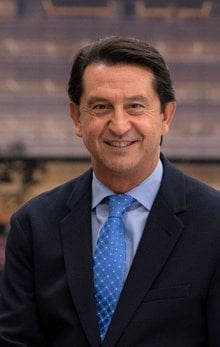
5. José Muñoz
Company: Hyundai Motor Company
Revenue: US$130bn
Location: Seoul, South Korea
José stands as a visionary leader in global manufacturing, steering Hyundai’s expansive international footprint across the Americas, Europe, India, the Middle East, Africa and Asia Pacific.
Previously serving as Global Chief Operating Officer, he has orchestrated unprecedented sales records, surging market share and robust profitability through razor-sharp volume strategies and empowered dealership networks, propelling Hyundai into the global top three automakers.
His bold US$12.6bn commitment to the Hyundai Motor Group Metaplant America and Georgia battery facilities heralds a transformative era in electrification and cutting-edge mobility.
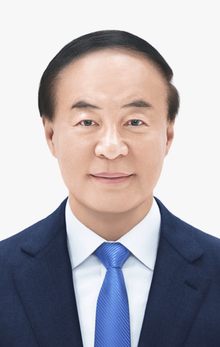
4. Jun Young-hyan
Company: Samsung Electronics
Revenue: US$203bn
Location: Suwon, South Korea
As Co-CEO of Samsung Electronics, Jun leads its Device Solutions Division as one of the world’s premier electronics manufacturers. He directs expansive operations in memory (DRAM, V-NAND), System LSI and Foundry, powering global supply chains for smartphones, PCs, servers and AI technologies with cutting-edge production scale.
Jun’s oversight ensures Samsung’s forefront position in high-bandwidth memory and advanced nodes, sustaining manufacturing excellence amid rising demands for efficient, high-performance chips.
His proven track record, from memory leadership to EV battery innovations, positions him as a pivotal force in Samsung’s worldwide manufacturing expertise.
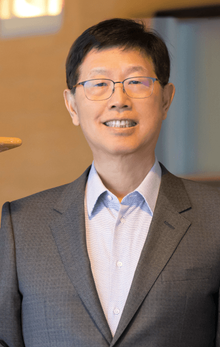
3. Young Liu
Company: Foxconn
Revenue: US$257bn
Location: New Taipei City, Taiwan
Leading global manufacturing, Young has guided Foxconn since 2019 to evolve from an electronics assembler - producing most iPhones - into a diversified innovator across EVs, AI, semiconductors and robotics.
Steering operations in 24 countries with 900,000 employees, he drives vertical integration and agile supply chain efficiency.
Foxconn’s expansion into EV platforms and next-gen technology under his leadership exemplifies strategic reinvention, sustaining its position as a cornerstone of global supply chains for smartphones, PCs, servers and emerging electric mobility.
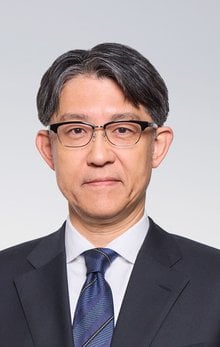
2. Koji Sato
Company: Toyota Motor Company
Revenue: US$317bn
Location: Toyota City, Japan
Koji leads Toyota’s global manufacturing system by championing a human-centred approach that balances standardised, high-quality production with local autonomy, guided by the principles of the Toyota Production System.
The CEO emphasises that developing skilled, problem-solving people is the highest priority, ensuring machines and digital tools serve human ingenuity, not the other way round.
Taking over in 2023, Koji pivoted the company toward a multi-pathway global strategy that combines a drastic acceleration in Battery Electric Vehicles, with continued investment in hydrogen, hybrid and carbon neutral fuels.
Toyota, one of the world’s largest automakers by volume, aims to increase manufacturing of BEVs and reach 3.5 million annual sales by 2030.
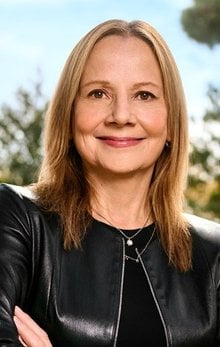
1. Mary Barra
Company: General Motors
Revenue: US$187.4bn
Location: Michigan, North America
Mary Barra has served as CEO of General Motors since 2014, exemplifying leadership in global manufacturing by navigating volatile markets and sustaining robust US sales.
She pivots GM toward profitable EV and autonomy strategies, pursuing the vision of zero crashes, zero emissions and zero congestion.
Through her direction, GM integrates advanced propulsion systems, cutting-edge battery technology and autonomous vehicle platforms to produce safer, more sustainable vehicles amid economic challenges.
Mary drives electrification and AV innovation, leveraging the company’s world-class production capabilities to deliver high-margin electric vehicles, ensuring sustained profitability and positioning the company as a leader in next-generation mobility.
Company portals







Executives
Dr. Young Hyun Jun
CEO
Elon Musk
Tesla CEO
Guillaume Faury
Member of the Board of Directors
José Muñoz
CEO
Kelly Ortberg
President and Chief Executive Officer
Koji Sato
CEO
Lip-Bu Tan
Chief Executive Officer
Mary Barra
CEO
R. Adam Norwitt
President and Chief Executive Officer
Young Liu
CEO (Chairman)