What is Elon Musk's Growth Strategy for Grok AI?
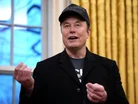
In a little under two years, Grok has become the flagship product of xAI, the company Elon Musk founded to build what he has described as a “maximally truth‑seeking” artificial intelligence – one that prioritises accuracy and objectivity over any ideological alignment.
Under this approach, the tool has become tightly connected to the X platform and aimed at both consumers and organisations.
It represents one of several forays into AI from Musk, including his work to lead Tesla’s drive to greater autonomy and his development of Neuralink, the tech firm created to explore brain-computer interfaces.
Grok’s growth has largely been as a result of a concerted effort from Musk to focus on distribution through X, tiered monetisation and an emerging enterprise offer, rather than positioning the technology as a standalone consumer app with its own user‑acquisition engine.
Writing on X at the time of Grok’s release, Musk said: “In some respects, it is the best that currently exists.”
He added that the AI “loves sarcasm” and would answer questions with “a little humour”, in particular “spicy questions that are rejected by most other AI systems”.

Why was Grok AI created?
xAI was launched in 2023 with the stated mission to “understand the true nature of the universe,” a statement that Musk and the company have often used when outlining its purpose.
In line with that approach, xAI has positioned itself as focused on AI systems that maximise truth and objectivity, as opposed to other tools that Musk has criticised as overly constrained or biased.
When launched, Grok was the first real deliverable of that mission in a product that end users can access at scale.
xAI pitches the AI as an assistant with a more direct, sometimes irreverent tone and a willingness to address topics that other chatbots may decline, while still operating within safety policies.
How Grok is used today
Largely, for most users Grok functions as an AI assistant available within X and through related interfaces, supporting tasks such as question‑answering, coding, content creation and real‑time information lookup.
One of its distinctive capabilities, highlighted by xAI, is its integration with X and the open web, allowing it to draw on live data for news, trends and sentiment rather than relying solely on static training corpora.
From mid‑2024 onwards, successive Grok versions have added features pitched to a business audience and executive users. This includes longer context windows, stronger reasoning and multimodal capabilities for working with images and visual information.
These developments were created to align Grok with more business‑relevant use cases such as analysing real‑time social signals, supporting research workflows and assisting with complex problem‑solving.
Within this environment, xAI has introduced Grok Business and Grok Enterprise tiers for organisational use.
Public information on these tiers emphasises higher usage limits, collaboration features and commitments that customer data will not be used to train Grok’s underlying models, directly addressing common corporate concerns around data control and security for AI tools.
For business leaders, that positioning means Grok is being presented as an option for adopting Gen AI while retaining stronger boundaries around proprietary information than in early “consumer first” AI offerings.
Elon Musk’s vision, open source and governance
Musk and xAI have reinforced the “truth‑seeking” positioning by releasing Grok model code under open‑source licences and publishing technical material and benchmarks for successive versions.
This approach is intended to enable external developers and researchers to inspect and build on Grok, and it provides enterprises and technical buyers with more transparency into how the system performs and evolves over time.
At the same time, Musk’s emphasis on a less constrained, more outspoken assistant has prompted public debate about bias, misinformation and the handling of sensitive topics.
Grok has been the subject of several controversies over the course of its existence.
In July 2025, X users shared responses made by Grok that showed alleged “anti-white hate” after it praised Adolf Hitler.
Musk wrote on X that “Grok was too compliant to user prompts” in response.
In January 2026 X implemented a set of sweeping restrictions after widespread criticism over Grok’s potential to create sexualised images of real people.
Widely, AI ethics and governance have moved rapidly to the top of board agendas because generative models now touch core areas of strategy, reputation and compliance rather than sitting on the periphery as “just” a technology choice