Why Has OpenAI Hired Slack's CEO as Chief Revenue Officer?

OpenAI has announced that Denise Holland Dresser, CEO of AI work management firm Slack, will be joining the company as its new Chief Revenue Officer (CRO).
She is tasked with overseeing OpenAI’s global revenue strategy across enterprise and customer success.
With the company declaring itself the “fastest-growing business platform in history”, Denise will help more businesses put AI to work in their day-to-day operations, according to an OpenAI press release.
Denise was named Slack’s CEO in 2023 after spending more than a decade at Salesforce, which acquired Slack for more than US$27bn in 2020.
The newly appointed CRO said in a statement: “I’ve spent my career helping scale category-defining platforms, and I’m looking forward to bringing that experience to OpenAI as it enters its next phase of enterprise transformation.”
Announcing her appointment on LinkedIn, she added: “I’m truly looking forward to working with Sam Altman, Fidji Simo, Brad Lightcap, Sarah Friar and the entire OpenAI team!”
Why Denise Holland Dresser?
OpenAI has chosen Denise for her experience in running large businesses, her deep understanding of customers and of scaled products that people in the workplace love to use.
In her role as CEO she led the company through its integration with Salesforce and helped redefine how millions of people use AI to work more efficiently and stay better connected, OpenAI says.
Fidji Simo, CEO of Applications at OpenAI, said: “We’re on a path to put AI tools into the hands of millions of workers, across every industry.
“Denise has led that kind of shift before, and her experience will help us make AI useful, reliable and accessible for businesses everywhere.”
Contributing to OpenAI’s success
With AI becoming a regular part of work, Denise is joining OpenAI at a time when companies are integrating the software at a rapid rate.
According to the firm, 75% of workers say that AI has improved the speed or quality of their work, with many saving 40-60 minutes per day and heavy users saving more than 10 hours per week.
More than one million business customers use OpenAI for internal operations, including Walmart, Morgan Stanley, Intuit, Databricks and Target.

Expanding the C-suite
OpenAI’s rapid growth was also reflected in Spring 2025 with the newly created role of CEO of Applications, overseeing the firm’s applications and business operations, with Sam Altman remaining overall CEO of the firm.
The AI firm describes this as a leadership expansion meant to strengthen execution while Sam focuses more on research, compute and safety, areas that continue to report directly to him.
Sam shared in a note to employees: “Applications brings together a group of existing business and operational teams responsible for how our research reaches and benefits the world, and Fidji is uniquely qualified to lead this group.”
The appointment fits into a broader pattern of new senior hires and role changes at OpenAI in 2025, including updates to research leadership and other executive positions.
A couple of months before this, OpenAI announced that Mark Chen stepped into an expanded role of Chief Research Officer, driving scientific progress and making sure the firm continues to push the frontiers in capability and safety.
At the same time, Brad Lightcap, Chief Operating Officer, expanded his role to oversee the company’s business and day-to-day operations, including leading global deployment and focus on business strategy.
These appointments aim to position OpenAI as the number one AI firm in the world, competing against the likes of Google, Nvidia, Meta and Anthropic.








Executives
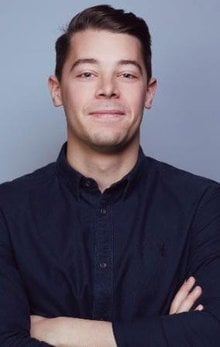
Brad Lightcap
COO
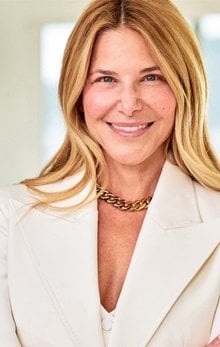
Denise Holland Dresser
Chief Executive Officer
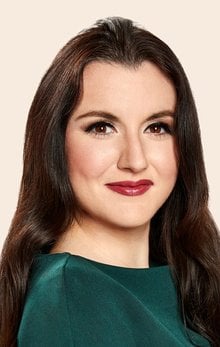
Fidji Simo
CEO, Applications at OpenAI
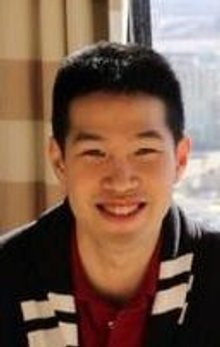
Mark Chen
Chief Research Officer
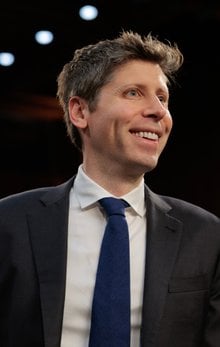
Sam Altman