
Why is Air India CEO Campbell Wilson Stepping Down?

Campbell Wilson is stepping down as Air India’s CEO, citing the company’s next growth phase as the reason for his departure.
The airline says Campbell informed company Chairman Natarajan Chandrasekaran about his plans to step down in 2026 as early as 2024, and has since been preparing the airline for a smooth leadership transition.
Campbell, who took charge in 2022 after the Tata Group acquired Air India for ₹18,000 crore (US$1.9bn), is currently serving a six-month notice period as the company continues its search to find a viable successor.
Discussing his departure in a company memo, Campbell said: “The four years since Air India’s privatisation has seen the acquisition and successful merger of four airlines, an evolution from public to private sector practices along with renewal of the leadership team, workforce, culture and ways of operating.
“The time is right for me to hand over the reins for the next phase of Air India’s rise. It has been a true honour to play a small part in this latest chapter of Air India’s long history, and I will continue to be an enthusiastic supporter of this wonderful organisation and its people.”
Following his leadership of Singapore Airlines’ low-cost arm Scoot – from 2011 to 2016 – Campbell was brought on board to Air India following its privatisation in 2017 to oversee structural changes, including fleet refurbishment and engineering upgrades.

Operational and financial challenges
Before Campbell joined the company, Air India had struggled financially following challenges related to safety regulations, increased fuel costs and geopolitical tensions.
Company revenue rose 13% to US$7.7bn in 2025, but losses persisted at around US$503m. The company’s budget arm, Air India Express, fared worse, with losses rising to US$735m. The combined loss for the airline group reached more than US$1bn.
Operational challenges such as regulatory action over safety lapses also resulted in financial uncertainty for the company. In December 2025, Air India acknowledged this in a company statement, saying the company needed “urgent improvements in process discipline, communication and compliance culture.”
Scrutiny from investors and regulatory boards worsened after a crash involving an Air India flight from Ahmedabad to London saw 260 passengers killed, leading to stricter flight checks and temporary groundings.
Additionally, political pressures have added to the strain. Airspace restrictions following tensions with Pakistan have resulted in longer flight routes and increased fuel costs.
The next stage of company growth
Praising Campbell’s leadership amid company-wide challenges, Natarajan said in a company statement: “On behalf of the Board, I wish to record my deep appreciation for Campbell’s leadership and contribution over the past four years.
“[It is] worth acknowledging the numerous external challenges navigated by the Air India team, including prolonged post-COVID supply chain constraints that have impacted delivery of new aircraft and retrofit programs as well as major geopolitical and other headwinds.”
Campbell’s departure comes at a notable time for Air India, as it prepares for the next stage of company expansion, including developments like the delivery of a widebody aircraft featuring newly-designed interiors, designed to appeal to travellers seeking a more premium offering.
His exit also coincides with the appointment of Willie Walsh as CEO for IndiGo, a rival competitor which is also seeking a new growth phase within India’s aviation market.
Discussing how Campbell has laid the groundwork for Air India’s future success, Nararajan added: “Campbell and his team have demonstrated tenacity and resolve and have aligned an organisation drawn from many backgrounds behind the shared goal of building the new Air India that is now emerging.”
Company portals

Executives

Campbell Wilson
CEO
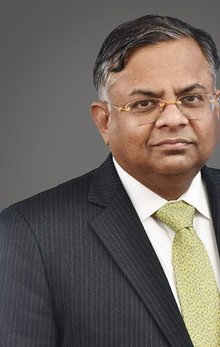
Natarajan Chandrasekaran
Chairman