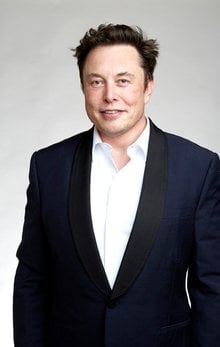
Why is Elon Musk Spending US$60bn on an AI Startup?
SpaceX has announced a US$60bn agreement to acquire the code-generation startup firm Cursor later this year, continuing its mission to corner the market on AI development tools.
Should the deal fall through, SpaceX has also agreed to pay a US$10bn exit fee.
Along with OpenAI and Anthropic, Cursor is one of many tech startups that has attracted developers by using AI to automate coding – a business that AI companies have found early commercial traction in.
The deal between Elon and Cursor could give xAI a stronger lead in the AI coding market, where it has seen slower growth compared to vibe-coding platforms like OpenAI’s Codex and Anthropic’s Claude Code.
It would also supply Cursor with access to SpaceX’s computing resources to develop AI models, including Colossus – a supercomputer powered by 200,000 Nvidia GPUs.
In a company statement on the agreement, SpaceX says: “The combination of Cursor's leading product and distribution to expert software engineers with SpaceX's million H100 equivalent Colossus training supercomputer will allow us to build the world's most useful models.”
Mirroring SpaceX’s optimism for the deal, Cursor’s CEO and Co-founder Michael Truell adds: “Excited to partner with the SpaceX team to scale up Composer. A meaningful step on our path to build the best place to code with AI.”

Scaling model intelligence
Cursor was founded in 2022 by four MIT classmates and since its inception has seen US$100m in annual recurring revenue in under two years.
In a Cursor blog post, it cites a shortage of compute as the reason for the company’s creation.
“We've wanted to push our training efforts much further, but we've been bottlenecked by compute,” the blog says.
“With this partnership, our team will leverage xAI's Colossus infrastructure to dramatically scale up the intelligence of our models.”
On a 2024 episode of the Lex Fridman podcast, Cursor’s founders described the company as a code editor that integrates AI into the software development process.
They added that they did not want a product like Microsoft’s VS Code or Copilot, describing those platforms as a chat window attached to an existing editing tool.
“When we started Cursor, you really felt this frustration that models, you could see models getting better, but the Copilot experience had not changed,” Sualeh Asif, one the company’s founders, said.
“It was like, 'Man, the ceiling is getting higher, why are they not making new things?' They should be making new things.”
The biggest IPO in history
Cursor managed to raise an US$8m seed round, led by OpenAI’s Startups Fund, in 2023. The following year, the company closed its first major funding round – a US$60m Series A at a US$400m valuation.
SpaceX’s plan to acquire Cursor comes ahead of its public debut in the coming months, with the company eyeing a valuation of close to US$1.75tn and a US$75bn fundraise that could go down as the biggest IPO in history.
Two former product engineering heads at Cursor, Andrew Milich and Jason Ginsberg, said in March they joined SpaceX to contribute to the company’s lunar projects and xAI.
In an X post announcing his transition to SpaceX, Andrew said: “Every day since [joining SpaceX as an intern], I’ve thought about the next steps to land on the Moon - and to build a city on Mars, data centers in space, the brains behind robots, and beyond.
“There is no better place to build teams and products from the ground up with planetary scale resources.”
Responding to Andrew’s post, Elon Musk said: “Welcome! Orbital space centers and mass drivers on the moon will be incredible.”