Is Elon Musk Finally Ready to Take SpaceX Public?
For 24 years, Elon Musk’s line has been relatively straightforward: “I’m hesitant to take SpaceX public until we’re on the way to Mars, or at least that Mars is certain.”
Since the company’s creation in 2002, Musk has repeated variations of this sentiment, telling employees and the media that a public listing would be a “disaster” because investors would prioritise quarterly profits over his dream of building a city on the Red Planet.
Now, it appears, Mars may be a little more certain. A 24 March report in The Information posited that SpaceX is aiming to file its IPO prospectus with US regulators within weeks, citing a person with direct knowledge of the plans.
The news was widely circulated by the likes of Reuters and The Economic Times, with SpaceX’s valuation of around US$1.75tn sending shares in space companies soaring in US trade, with some firms seeing a rise of as much as 10%.
Morgan Stanley, Goldman Sachs, JPMorgan Chase and Bank of America have been widely positioned as potential underwriters in the IPO process.
Taking SpaceX public: the journey
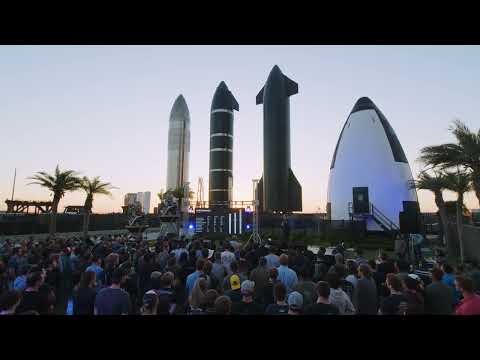
While the IPO is being described as a historic market event based on value and timing, SpaceX’s origins are far more humble: a greenhouse.
Musk’s early vision for space travel lay in the Mars Oasis project, a plan aiming to send a small, robotic greenhouse to Mars to grow plants in a dehydrated nutrient gel.
While the idea never launched, it spurred the founding of SpaceX to develop the necessary rocket technology needed to fire greenhouses – and eventually humans – to the planet.
Musk put US$100m of his own money (more than half his payout having been ousted as CEO of PayPal in 2000) into founding the company in March 2002, saying at the time: “The goal is to revolutionise space technology, with the ultimate goal of enabling people to live on other planets.”
The company has since become a leader in the aerospace sector, securing billions of dollars in space projects and US government contracts.
It also owns xAI, which in turn owns social media platform X and the AI chatbot Grok.
Musk has spent years holding the line against taking the company public – in a leaked 2018 memo he told employees that the “short-term thinking” of the stock market would be “counter-productive” to the mission of making life multiplanetary.
He abandoned this in late 2025. An article by space journalist Eric Berger set out the massive capital requirements for the company’s mission, stating that it made an IPO inevitable.
Musk replied directly to this report on X, saying: “As usual, Eric is accurate”.
Space stock soars
The reports of SpaceX’s record-breaking IPO have ignited activity across the space sector.
Following The Information’s disclosure, mid-cap space stocks surged as investors sought proxies for the US$1.75tn giant.
On March 25, Rocket Lab climbed 11.4%, while Intuitive Machines and Sidus Space saw intraday jumps of 19.7% and 24.9%, respectively.
This rally reflects a Netscape moment for the industry, as the xAI-SpaceX merger and orbital data center vision reclassify space from a niche vertical to a foundational AI infrastructure play.

From terra firma to Terafab
Beyond his orbital ambitions, Musk is moving to secure the "key missing ingredient" of the modern tech economy: silicon.
Through his new venture, Terafab, Musk has announced plans to construct two advanced semiconductor fabrication facilities in Austin, Texas, designed to provide a dedicated supply chain for Tesla, xAI and SpaceX, producing everything from humanoid robot controllers to space-hardened satellite chips.
The move comes as the semiconductor market, valued at US$775bn in 2024, is projected by McKinsey to reach up to US$1.8tn by 2030.
However, Musk warns that global supply cannot keep pace with his internal requirements. “This announcement is about solving the key missing ingredient,” he says. “To give you a sense of what we are talking about, the current output of AI compute is roughly twenty gigawatts per year. This chart explains why we need to build the Terafab because all of the rest of the output from earth is about 2% of what we need.”
The Austin facilities represent a radical simplification of traditional manufacturing.
“Terafab will technically be two fabs, each making only one chip design," Musk notes. "This greatly simplifies process flow and allows more linear, adjacent movement of the FOUP.”
This pivot toward domestic, in-house production aligns with broader US efforts to reshore critical manufacturing.
While Musk remains "very grateful" to existing partners, he cited a mismatch in scaling speeds.
He says: “We certainly want our existing supply chain to be clear. We are very grateful to our existing supply chain. To Samsung, TSMC, Micron and others. And we would like them to expand as quickly as they can.
“And we will buy all of their chips. I have said these exact words to them. But there's a maximum rate at which they're comfortable expanding. But that rate is much less than we would like.”