Elon Musk's xAI: Co-Founders Exit After SpaceX Merger
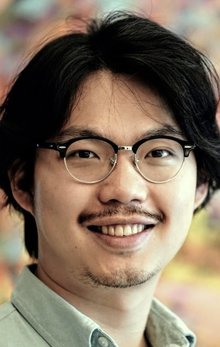
Jimmy Ba, one of the original architects of Elon Musk's AI company xAI, has stepped down from the business, becoming the second co-founder to exit within 48 hours.
"Last day at xAI," he wrote in a post on X on 11 February. "Grateful to have helped cofound at the start. And enormous thanks to @elonmusk for bringing us together on this incredible journey."
He added: "It's time to recalibrate my gradient on the big picture."
Jimmy said he remains "so proud of what the xAI team has done" and would "continue to stay close as a friend of the team". He said its the people that are "the real treasures at this place".
His departure comes a day after fellow co-founder Tony Wu announced his own decision to move on. "It's time for my next chapter," he wrote in an X post on 10 February. "It is an era with full possibilities: a small team armed with AIs can move mountains and redefine what's possible."
The exits mean that about half of the 12 co-founders who established xAI in 2023 have now left, including Kyle Kosic, Igor Babuschkin and Christian Szegedy.
Jimmy was widely recognised for research that underpinned key elements of xAI's Grok models, and he oversaw research, safety and enterprise initiatives within the start-up.
Merger reshapes the playing field
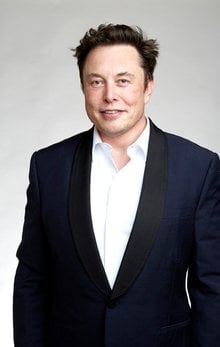
The leadership changes follow closely on the heel's of Elon's decision to fold xAI into SpaceX in an all-stock deal valuing the combined group at roughly US$1.25tn.
The strategic logic, as outlined by the CEO of both companies, centres on overcoming the growing strain AI systems place on Earth-bound infrastructure by shifting compute capacity into orbit.
"To harness even a millionth of our Sun's energy would require over a million times more energy than our civilisation currently uses," Elon said when announcing the combination.
"The only logical solution therefore is to transport these resource-intensive efforts to a location with vast power and space. By directly harnessing near-constant solar power with little operating or maintenance costs, these satellites will transform our ability to scale compute.
"My estimate is that, within two or three years, the lowest cost way to generate AI compute will be in space," he says.
SpaceX's Starship vehicle is expected to be central to deploying a network of AI satellites that would operate as solar-powered data centres in orbit. Elon has also described longer-term ambitions involving production beyond Earth.
"Factories on the Moon can take advantage of lunar resources to manufacture satellites and deploy them further into space," he said.

Scrutiny and scale
The merger comes at a sensitive moment for xAI. The company is facing regulatory investigations in several jurisdictions linked to its AI systems, including the creation of non-consensual explicit imagery.
Meanwhile, the company has been competing aggressively with OpenAI and Anthropic, through investing heavily in chips, data centres and specialist talent to keep pace.
Jimmy's farewell message struck a forward-looking note despite his exit. "2026 is going to be insane and likely the busiest (and most consequential) year for the future of our species," he wrote.