Why Lamborghini CEO Stephan Winkelmann is Rethinking EVs
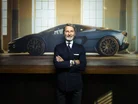
When Lamborghini introduced the Lanzador in August 2023, it presented the model as an all-electric concept that would go on to be the brand’s first full EV by the end of the decade.
Launched as part of the Italian marque’s ‘Direzion Cor Tauri’ strategy – a future-facing approach designed to electrify its models and decarbonise production facilities – the Lanzador was built around a high-performance battery and “over one megawatt” of power.
A lot has changed in the EV market in the two years since.
Sales are still rising, but momentum has cooled in key Western markets with hybrid vehicles regaining appeal with consumers over all-electric models.
Policy signals have also shifted tone. Long-term decarbonisation goals remain, yet several near-term frameworks have become more flexible, allowing a bigger role for hybrids and synthetic-fuel alternatives.
For Lamborghini, there’s also the small matter of customers still wanting “the sound and the emotion” of internal combustion engines, CEO Stephan Winkelmann told the BBC.

Is the market ready?
Strategically, the plan to pursue a battery-electric vehicle (BEV) future at Lamborghini has been on Winkelmann’s agenda for a while.
In December 2024, he told reporters at the brand’s Bolognese HQ that the planned timeline and 2029 launch for the Lanzador was based on pervading trends.
“We do not think 2029 is too late to have an electric car,” he said. “We do not think that, in our segment, the market will be ready in 2025 or 2026.”
In a series of more recent interviews, Winkelmann has discussed a possible swerve away from all-electric, saying that Lamborghini will decide imminently whether Lanzador will follow its original design or be developed as a plug-in hybrid (PHEV).
Speaking with Autocar, he said: “With Lanzador, we need to decide whether it will be a PHEV or electric in the next few weeks.”
He added: “When it comes to our cars, [customers] don’t see BEV as an alternative today. We could do a BEV but I think it is a bad offer for the next few years.”
Citing shifting global policies regarding vehicle emissions, Winkelmann explained: “We will meet Euro 7 [emissions targets] which is a huge step. But in the US we have different rules, for example. We have to start flexible and alert in this sense. It is more favourable to continue to do PHEV cars.”
He also said that the company’s V12 internal combustion engine, which powers its Revuelto model, will continue to be made after 2030.
Luxury vs mass market
In an interview with the BBC, Winkelmann said a decline in demand for electric cars gives Lamborghini an opportunity to focus on hybrid power.
“Today, enthusiasm for electric cars is going down,” he said. “We see a huge opportunity to stay with internal combustion engines and a battery system much longer than expected.”
Explaining that ongoing use of internal combustion engines for another decade is “paramount for the success of the company”, he told the BBC: “We still need to decide whether we are going full electric, the decision we took some years ago, or seeing whether in the environment this should also be a plug-in hybrid.”
Despite this potential shift, he said the company remains socially responsible but argued that its status as a low-volume luxury manufacturer meant its actions have limited environmental impact.
In 2024, Lamborghini manufactured 10,687 cars. By comparison Toyota, the world’s largest hybrid car maker, sold 10 million cars globally, of which around 40% were hybrid vehicles.
The Italian brand, which is owned by Volkswagen AG, has three models in its line-up – Revuelto, Urus SE and Temerario – all of which are plug-in hybrids.
Revuelto and Temerario are supercars with petrol engines and electric motors. Urus is an SUV powered by a 4.0-litre twin turbo V8 engine and electric motor.
"We are selling 10,000 cars in a world that is producing 80 million cars a year, so our impact in terms of CO2 emissions is not that important," Winkelmann told the BBC.
"For sure, we are socially responsible, but it doesn't really make a lot of difference."
What about rival car makers?
Lamborghini’s long-standing rival Ferrari is not of the same opinion. The marque, headquartered just an hour’s drive from Lamborghini’s home, is developing its first all-electric car.
Ferrari demonstrated key components of the car, known as Elettrica, on 9 October.
It says the model is “the culmination of a long journey of technological research into electrification that began with the first hybrid solutions derived from the 2009 Formula 1 car”.
Benedetto Vigna, CEO of Ferrari: “Ferrari’s unique positioning lies at the crossroads of heritage, technology and racing. Our founder’s teachings, his visionary spirit, his drive to audaciously redefine the limits of possible, and his deeply rooted passion for motor sport all continue to define who we are today and guide our ambitions for the decade ahead."
Elletrica will be unveiled in the Spring of 2026.
Company portals

Executives
Stephan Winkelmann
Chairman and CEO