
How Bold Leadership is Driving BYD’s Growth Strategy
BYD is climbing in ranks in the UK EV market, with September 2025 figures showing an astonishing 880% year-on-year increase.
In September alone, the automaker sold 11,271 vehicles in the UK, bringing its 2025 total to over 35,000, according to CNBC.
BYD’s meteoric rise in the UK market reflects more than just strong sales figures - it underscores the power of bold leadership, agile strategy and a commitment to sustainable innovation.
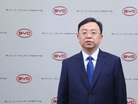
This milestone establishes the UK as BYD’s largest market outside China, a result of strategic international expansion led by Founder and CEO Wang Chuanfu.
His visionary leadership has transformed BYD from a small battery manufacturer into a global electric vehicle and renewable energy powerhouse.
Known for balancing innovation with affordability, BYD’s pricing strategy has played a pivotal role. The BYD Dolphin, for example, starts at just over £26,000 (US$34,880), offering a more accessible alternative to competitors like Tesla’s Model 3.
Wang’s long-term vision has been clear for over 15 years. In 2008, he boldly stated: “For new-energy cars, we believe we can become the global leader.
“From the technology standpoint, 10 years should be enough. I believe Chinese companies can become leaders in the alternative car business because we make good batteries.”
Today, that prediction is rapidly becoming reality. With a growing market share, diverse model line up and strategic resilience, BYD is positioning itself not just as a leading EV manufacturer, but as a key driver of the global transition to clean mobility.
Integrated Vehicle Intelligence
In its 2025 Interim Report, BYD outlined its Integrated Vehicle Intelligence strategy and established its ‘God’s Eye’ technology matrix.
This development, announced in February 2025, relies on cameras and sensors to assist drivers with valet parking, adaptive cruising and automated braking.
BYD says this delivers a driving experience that “improves with every mile and enhances safety with every use.”
The report shows that, by the end of May 2025, the company sold over 710,000 intelligent driving-equipped vehicles generating more than 44mn kilometres of intelligent driving data daily.
In the first half of 2025, the Group’s continuous improvements of the product matrix and further upgrades drove rapid sales growth.
By leveraging this new technology, BYD has continued to expand its multi-brand product layout, including FANGCHENGBAO, Denza and Yangwang.
This innovative strategy is a continuation of the CEO’s vision. During the 2024 BYD Dream Day event, Wang said: “Integrated Vehicle Intelligence is set to steer the future direction of vehicular intelligence and to accelerate the transformation of the automotive industry.”
BYD also continues the growth of its European strategy.
First announced in 2023, the company built a brand-new manufacturing and production centre in Hungary, becoming the first-of-its-kind facility in Europe to have an advanced car production line for a Chinese automotive company.
Looking forward, the company says it will continue to intensify brand marketing, optimise channel management and incorporate customer feedback to enhance its reputation.

Full market EV strategy
BYD’s 7+4 Full Market Strategy was launched in 2015, creating seven conventional and four specialised types of vehicles to best meet consumer demands.
The strategy encompasses most forms of ground transportation and aspects of daily transport needs.
The seven conventional types of transportation are:
- Passenger vehicles
- Taxis
- Buses
- Coaches
- Urban logistics vehicles
- Urban construction vehicles
- Urban sanitation vehicles
The four specialised types are:
- Vehicles for mining
- Ports
- Airports
- Warehousing
Since its entry into the auto market in 2003, the company has maintained the goal of net zero emissions, combined with an understanding of market needs.
While its overarching strategy may evolve, BYD’s core vision remains the same: “fulfil our commitment to transforming and eliminating fossil fuels."
Company portals

Executives
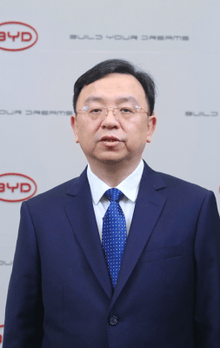
Wang Chuanfu
CEO