Why Satya Nadella’s Microsoft Hiring Plans Focus on AI
After multiple periods of job cuts, Microsoft is planning to expand the company’s employee base again, but this time with AI guiding the company’s growth.
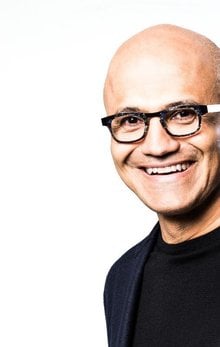
CEO Satya Nadella revealed that the tech giant is planning to increase its headcount again, signalling a new hiring phase following a year of caution.
Appearing on investor Brad Gerstner’s BG2 podcast that aired on 31 October, the CEO said: “I will say we will grow our headcount, but the way I look at it is, that headcount we grow will grow with a lot more leverage than the headcount we had pre-AI.”
New employees will figure out how to do jobs differently, finding how to utilise AI to amplify its impact, not do the jobs that AI can do.
Satya highlighted this on the podcast by referencing a Microsoft exec who deals with networking fibre. He said that she realised that she wouldn’t be able to hire all the people that she needed to meet the increased demand of the company’s data centres so built AI agents to handle the maintenance instead.
“It’s the unlearning and learning process that I think will take the next year or so, then the headcount growth will come with max leverage” the CEO said.
Satya added that Microsoft wants to ensure all employees can access AI features in Microsoft 365 productivity software and the GitHub Copilot AI coding assistant.

Microsoft’s job cuts in 2025
In June, Microsoft’s headcount stood at 228,000, with multiple rounds of layoffs lowering this figure by thousands throughout the summer of 2025.
In May, Microsoft announced job cuts across all levels and teams, affecting 6,000 people, equating to 3% of its workforce at the time.
This followed better-than-expected results with US$25.8bn in quarterly net income for the first quarter of 2025.
A Microsoft spokesperson told CNBC at the time: “We continue to implement organisational changes necessary to best position the company for success in a dynamic marketplace.”
In January the company announced a small round of layoffs that were performance-based, but then spokesperson said that was not the case for this round.
At the time, it was anticipated to be Microsoft’s largest period of job cuts since the elimination of 10,000 roles in 2023. However, in July the firm announced a further 9,000 jobs would be cut.
A spokesperson told CNBC that both month’s cuts aimed to reduce the numbers of layers of managers that stand between individual contributors and top executives.
In a memo to employees at the time, Phil Spencer, Microsoft’s CEO of Gaming, said: “To position Gaming for enduring success and allow us to focus on strategic growth areas, we will end or decrease work in certain areas of the business and follow Microsoft’s lead in removing layers of management to increase agility and effectiveness.”
For comparison, in Microsoft’s 2022 fiscal year, the company’s headcount grew by 22%, at the time when OpenAI introduced ChatGPT, which had a broad relationship with Microsoft.
AI at Microsoft
At the end of October, Satya released his 2025 annual letter to shareholders, emphasising a strategy of “thinking in decades, executing in quarters”.
Discussing the AI platform shift at the heart of Microsoft’s growth strategy, he said: “More than any transformation before it, this generation of AI is radically changing every layer of the tech stack, and we are changing with it.”
The company continues to lead in AI infrastructure, operating more than 400 data centres across 70 regions worldwide.
Microsoft has also opened the Fairwater datacentre, which Satya says is “the world’s most powerful AI datacentre”.
Investments in quantum computing and platforms, like Microsoft Fabric, position the company at the frontier of cloud and AI integration , while Azure AI Foundry aggregates more than 11.000 models from leading partners.

Microsoft’s AI strategy, according to the letter, also extends to practical applications via its Copilot family of products.
Satya has repeatedly referred to the fact that the company’s AI use and innovation is built on the purpose of increasing productivity and furthering growth against its AI competitors.


Executives
Phil Spencer
CEO of Microsoft Gaming
Satya Nadella
Chairman and CEO