Microsoft Announces Scout, an Always-On AI Agent for Teams

Microsoft has unveiled Scout, an always-on AI agent that sits inside Teams like a colleague, reading messages, email and calendars. It clears scheduling conflicts, drafts responses and chases open tasks while its human counterpart is away from the desk.
Scout was announced at the Build developer conference in San Francisco on 2 June and is built on OpenClaw, the open-source agent framework that captivated early adopters at the start of 2026 before its founder was acquired by OpenAI.
“Your company essentially hires your assistant,” Omar Shahine, Corporate Vice President of Microsoft Scout, tells WIRED. “The whole point of having a personal assistant is that they’re working when you’re not working.”
Access starts small. Copilot Frontier subscribers get a desktop app now, enterprise access opens via waitlist from the fourth quarter of 2026 and a public beta is not expected before mid-2027.
An assistant the company hires for you
Scout belongs to a new category Microsoft calls Autopilots, always-on agents that act on a user’s behalf rather than waiting for prompts. In practice, the new agent works like this:
- Every Scout can be managed and audited much like an employee account
- Employees set goals and preferences for the agent to work around. Omar told his Scout to protect family dinnertime
- It tracks open commitments. Omar has asked his agent to log every promise made to him and every commitment he has given
- At Build, Microsoft demonstrated Scout preparing an entire quarterly review without the user switching between a single app.
Inside Microsoft's leaked product playbook
The launch arrived with an unplanned companion. On the same day, 404 Media published an internal strategy document titled ClawPilot: Overview and Plan with Project Lobster, revealing Microsoft had piloted Scout under that name since March.
The document sets out a three-phase roadmap "from addictive app to agentic platform", with a first phase labelled "Make people addicted". The wording is candid shorthand for a goal every software company shares: becoming part of the daily routine.
The strategy itself is familiar. Build the habit first, then layer in capabilities until the tool becomes a platform, which is where the Scout roadmap ends up.
For executives weighing deployment, the takeaway is practical. A tool built to embed this deeply in daily work delivers most where adoption is matched by governance from day one.
Rough edges, guardrails and an unfinished product
The product is not finished. Omar admits his own agent, nicknamed Sebastian, recently sent an email that “was just one big run-on sentence, no formatting”, Wired reports. He advises users to decide carefully which tasks deserve automation and which still need direct supervision.
The risks scale with the access, because agentic tools are vulnerable to prompt injection attacks, where bad actors trick a bot into actions or disclosures it should refuse.
Microsoft is answering with a deliberately staged rollout, a policy conformance system and audit trails that let administrators track everything agents do. Priority access goes to organisations already using Microsoft 365 E5 and Purview, placing the most governed customers first in the queue.
The platform race becomes an agent race
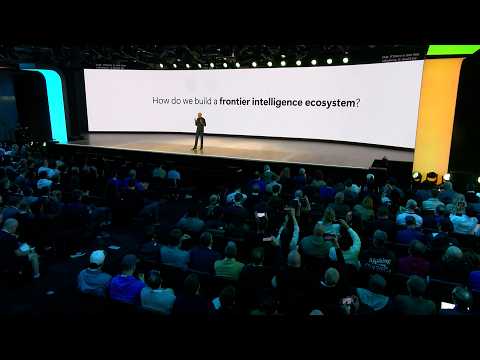
Scout is the sharpest expression of an agent-first strategy that ran through the whole conference. “There’s a real platform shift. We’re moving from building operating systems, devices for apps, to agents,” CEO Satya Nadella said in his Build keynote.
A Scout software development kit will let third parties build custom skills, positioning the product as a platform rather than a feature. The commercial stakes are visible in Copilot’s own history: adoption sat at roughly 3% of Microsoft 365 customers at the start of 2026 before climbing to 20 million paid users.
Google is running the same play, with its rival agent Gemini Spark due to reach enterprise customers later this year.
The battle for the office suite is becoming a battle over whose agent owns the workday, and the future of white-collar work is heading the same way. Employees go home, take holidays and sleep. Scout never logs off.



Executives

Omar Shahine
Corporate Vice President
Satya Nadella
Chairman and CEO