How Microsoft AI’s CEO Sees the Future of White Collar Work

Mustafa Suleyman, CEO of Microsoft AI, has predicted that white-collar work will be automated within a year and a half.
According to Mustafa, these changes can already be seen in fields such as coding, where relationships with technology are changing significantly due to advancements in AI.
In an interview with the Financial Times, he said that he thinks “we're going to have a human-level performance on most, if not all, professional tasks.
“So white-collar work, where you're sitting down at a computer, either being a lawyer or an accountant or a project manager or a marketing person – most of those tasks will be fully automated by an AI within the next 12 to 18 months.”

Developing Human Superintelligence
Mustafa joined Microsoft in 2024 to lead the company’s newly developed AI research and development hub.
In that time, he has turned the focus of Microsoft’s AI strategy towards Human Superintelligence (HSI), which looks to build AI that is a highly capable companion designed to serve human interests.
Mustafa has shared on a company blog that developing HSI is “accelerating our path towards tackling our most pressing global challenges”.
He said: “At Microsoft AI, we’re working towards Human Superintelligence: incredibly advanced AI capabilities that always work for, in service of, people and humanity more generally.”
In this role, he has also worked closely on building Microsoft’s Copilot capabilities to transform it into a tool more personalised for individual users – enabling it to complete more complex tasks and providing it with a longer memory to remember previous conversations.
AI delivery at Microsoft
Microsoft is embedding AI in all areas of its business, with CEO Satya Nadella saying in a 2025 shareholder letter that “More than any transformation before it, this generation of AI is radically changing every layer of the tech stack, and we are changing with it.”
With these changes, the company has said new growth will be led by AI. In October, Satya shared on Brad Gerstner’s BG2 podcast that the company was looking to increase headcount in an AI-informed way.
He said: “I will say we will grow our headcount, but the way I look at it is, that headcount we grow will grow with a lot more leverage than the headcount we had pre-AI.”
For Microsoft, this means ensuring employees are confident using AI capabilities to deliver the most growth possible in their roles – particularly as AI capabilities increase
Satya added: “It’s the unlearning and learning process that I think will take the next year or so, then the headcount growth will come with max leverage”.
Increasing workplace productivity
While Mustafa believes white-collar roles may become fully automated in the near future, there are mixed opinions on what this means for the future of work.
Elon Musk has claimed at the US-Saudi Investment Forum that advancements in AI and robotics will make work “optional” in the next two decades, saying “it’ll be like playing a video game”.
Jamie Dimon, CEO of JP Morgan Chase, also believes AI will reduce the amount people are working, sharing at the America Business Forum in November that people “will be working three and a half days a week in 20,30,40 years, and have wonderful lives.”
Mark Dixon, CEO and founder of IWG, however, thinks people will work just as much in an AI-enabled future
In conversation with Fortune, he said: “AI will speed up companies' development, so there’ll be more work, it’ll just be different work”.
In this working environment, Mark shares that he thinks those who will succeed in AI-led workforces will be those who develop the skills to work with the technology and deliver measurable results.
Company portals


Executives
Elon Musk
Tesla CEO
Jamie Dimon
Chairman of the Board
Mark Dixon
Founder & Chief Executive Officer
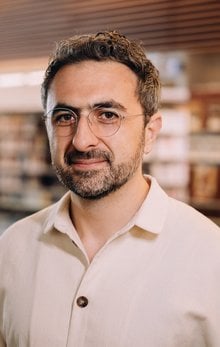
Mustafa Suleyman
CEO of Microsoft AI
Satya Nadella
Chairman and CEO