WEF: CEO Elon Musk on Robotaxi, AI and Robotics Strategies
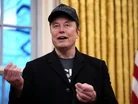
Elon Musk's appearance on 23 January 2025 at the World Economic Forum in Davos marked a strategic pivot for the Tesla CEO, who previously branded the event "elitist" and "unelected".
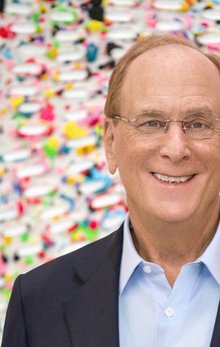
Speaking alongside Larry Fink, Chief Executive Officer of BlackRock, the world's richest man outlined an ambitious roadmap that could reshape global industry, energy policy and labour markets.
His companies, including Tesla and SpaceX, form the operational backbone of a vision he frames as maximising "the probability that civilisation has a great future".
The strategic implications of Elon's announcements extend beyond individual product launches. They signal a broader shift in how technology companies position themselves within geopolitical and economic frameworks, particularly as governments grapple with energy transitions and workforce automation.
Autonomous vehicles face regulatory hurdles
Tesla's self-driving strategy could encounter significant obstacles despite Elon telling the World Economic Forum that autonomous transport is "essentially a solved problem at this point". The company's Cybercab is currently under federal investigation following footage of traffic violations during public trials in Austin, Texas.
Elon revealed that Tesla has deployed robotaxis across several American cities and expects "very widespread" rollout across the US by the end of the year.
The international expansion strategy hinges on regulatory approvals, with Tesla seeking clearance for "supervised Full Self-Driving" in Europe in February 2025 and pursuing similar timelines for China.
This multi-market approach could present strategic challenges as regulatory frameworks vary considerably between jurisdictions. The success of Tesla's autonomous strategy may depend less on technological capability and more on navigating complex approval processes across different territories.
Regulatory challenges extend beyond the US, with the European and Asian markets presenting distinct compliance requirements that could delay international expansion plans.
Energy policy creates strategic tensions
Elon's comments on solar energy highlighted potential strategic friction with US policy direction. He said that America possesses sufficient natural resources for complete energy self-sufficiency through solar power.
"You could take a small corner of Utah, Nevada or New Mexico... to generate all of the electricity that the US uses," he explained.
However, he identified tariff barriers as a critical impediment, stating that "the tariff barriers for solar are extremely high and that makes the economics of deploying solar artificially high". This observation could signal a divergence from President Donald Trump, who has promoted oil and gas expansion whilst freezing solar project approvals.
The strategic tension becomes particularly acute when considering data centre requirements for AI.
Elon emphasised that securing adequate power is "critical" as energy demands surge alongside Gen AI development, suggesting that current policy approaches may hinder competitive positioning in the global AI race.
Energy infrastructure challenges affect markets globally, with countries across Europe and Asia facing similar tensions between renewable energy ambitions and existing policy frameworks.

Robotics strategy targets mass adoption
Elon's most ambitious strategic prediction centres on robotics fundamentally altering global economics. He forecast that "there will be more robots than people" in the future, describing this transition as "the path to abundance for all" and the primary solution to global poverty.
Tesla's Optimus humanoid robot could represent the commercial realisation of this strategy. Currently performing "simple tasks in the factory", Elon anticipates that Optimus will handle more complex operations by the end of the year.
"Probably by the end of next year, I think we'd be selling humanoid robots to the public," he stated, with expectations of "very high reliability" by late 2026.
The strategic positioning frames robotics as addressing demographic challenges in ageing societies where younger populations cannot provide sufficient care.
"Who wouldn't want a robot to, assuming it's very safe, watch over your kids, take care of your pets?" Elon asked, positioning domestic robotics as essential household infrastructure rather than luxury technology.
Yet strategic risks remain prominent. Elon acknowledged safety concerns, noting "we need to be very careful with robotics. We don't want to find ourselves in a James Cameron movie" - a reference to the Terminator film series depicting dangerous AI.
His Gen AI startup, xAI, faces regulatory scrutiny over "sexually explicit content" generated by its Grok chatbot, according to reports from technology industry observers, demonstrating how safety considerations could constrain commercialisation strategies.
On AI timelines, Elon predicted capabilities surpassing individual humans "by the end of this year" and collective human intelligence by "2030 or 2031". This progression could trigger what he described as an "explosion in the global economy", fundamentally transforming labour markets and industrial production.
When asked about Mars colonisation, Elon maintained his characteristic approach, joking: "People ask me 'do I want to die on Mars?' and I'm like: 'yes, but not on impact'."



Executives
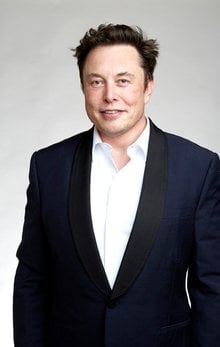
Elon Musk
Tesla CEO
Larry Fink
Chairman and Chief Executive Officer