
Apple’s Plans for AI and Market Growth Under John Ternus
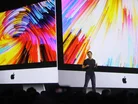
Following the announcement of John Ternus as Apple’s newest CEO, succeeding Tim Cook, the company is preparing for a company-wide shift to implement AI across all its product offerings, despite concerns around tariffs and supply chain uncertainty.
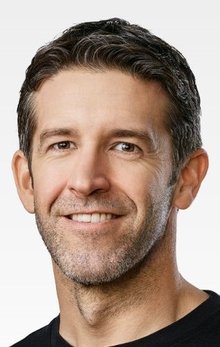
On 20 April, Apple announced John Ternus as its latest CEO, who will officially take up the leadership reins on 1 September this year.
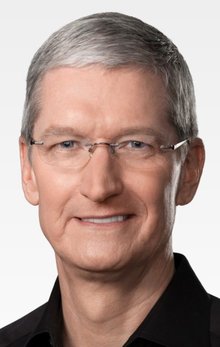
Unlike Tim, who turned Apple into a US$4tn tech service and supply chain powerhouse, John has served as a hardware engineer since 2001, contributing to major Apple products like AirPods, the Apple Watch and the Vision Pro.
John’s skillset is focused on the hardware itself, rather than management of the overall business. His appointment reflects a shift to a more hardware and device-focused strategy for the company’s future.
As John takes up the leadership position, he faces several impending challenges, including supply chain issues brought on by geopolitics, soaring prices for memory due to unprecedented demand from the AI buildout and the push to establish Apple an AI-powered technology company, an area where the company has largely fallen behind its megacap competitors.

Existing AI options for Apple users
Despite the AI boom in the past few years, Apple has avoided large investments into the technology compared to companies like Microsoft, Google, Amazon and Meta, who have spent billions of dollars to fund new data centre builds and AI chips.
Instead of developing its own AI model, the company has largely relied on Google’s Gemini to power its AI features, including a major Siri update expected later this year.
In 2024, Apple launched Apple Intelligence, a programme that includes image generators, text rewriters and an integration with OpenAI’s ChatGPT.
Despite a mixed consumer response, with issues encountered like the accuracy of the company’s AI notification summarisers, sales continue to break records, with Demandsage reporting that there were more than 1.5 billion iPhone users in 2025.
In addition to this success, Apple already offers users multiple options for AI software across its App Store from companies like OpenAI’s ChatGPT and Anthropic’s Claude.
Timothy Hubbard, Assistant Professor of Management at the University of Notre Dame, spoke on John’s appointment during the AI boom in an interview with CNBC, saying: “By choosing a hardware leader in John Ternus, Apple may be signalling that it still believes the future of AI will run through tightly integrated devices, not just software.”
New technologies to further growth
AI-enabled hardware is a key area of growth in the current tech market, with applications like AI chips, wearables, robotics and spatial computing driving demand for the technology.
Bloomberg reported in January that Apple will be accelerating the development of three upcoming AI wearables all built around Siri: smart glasses, a pendant and AirPods with cameras.
Apple is also expecting to introduce a foldable phone, which Ben Bajarin, CEO of Creative Strategies, said was “the most consequential hardware moment in years”.
Speaking to CNBC in March, Ben said: “I think the biggest question is what comes after the iPhone.”
“These are mature categories and we have no idea what comes after that but we do know it will be some form of AI hardware.”
Breaking revenue records
On 30 April, Apple will release its second-quarter financial results for fiscal year 2026, marking the first earnings report since Tim announced his plans to retire this year.
In the first quarter of fiscal 2026, Apple set an all-time revenue record of US$143.8 billion, with iPhone revenue rising 23% year-over-year to US$85.3 billion, surpassing market expectations by US$4.7 billion and becoming the strongest driver of Apple's record-breaking growth.
As discussed on the Q2 conference call, Apple investors highlighted rapidly rising prices for memory, processors and SSDs due to the build-out of AI infrastructure.
The company is expected to deliver US$55.5 billion in iPhone sales and $242.6 billion in FY 2026 according to a report by Melissa Otto from S&P Global.
“Overall, large looming questions remain about the supply chain; however, iPhone expectations are continuing to show positive momentum this quarter, driven by upgrades,” she adds.
In a recent analysis by Bank of America, analyst Wamsi Mohan echoed this point on Apple’s likely growth in 2026 and 2027, saying that Apple under Ternus’s leadership could lead to a new era of devices, defined by AI-powered hardware and smart home devices.
He also added that “2027 could be a big product year” for Apple, coinciding with the 20th anniversary of the iPhone.







Executives
John Ternus
CEO
Tim Cook
Executive Chairman