Can Intel's Senior Leadership Changes Drive a Turnaround?
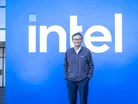
It’s been challenging for Intel of late. Not least for CEO Lip-Bu Tan, who President Donald Trump publicly, and rather bluntly, called on to resign in early August.
Trump accused Tan, who has only held the top seat at the US tech firm since March 2025, of having problematic ties to China, referring to his alleged investments in companies that the US says are tied to the Chinese military. No evidence was found to support Trump’s claims.
Writing on his Truth Social platform, Trump said: “The CEO of INTEL is highly CONFLICTED and must resign, immediately. There is no other solution to this problem.”
In a note to staff, Tan described the criticism as “misinformation”.
Since joining Intel, the CEO has made several changes at the business in order to mitigate challenges related to underperforming chip releases and shrinking market share.
Shortly after his appointment, Tan said in an April message to employees that the company was “navigating an increasingly volatile and uncertain macroeconomic environment”, adding that “there are many areas where we must improve”.
Included in Tan’s note were plans to flatten Intel’s executive structure, a step he said would “drive greater simplicity, speed and collaboration across the entire company”.

Product CEO leaves the business
On 8 September, Intel announced a series of executive changes, including the departure of CEO of Intel Products Michelle Holthaus, who had been with the business for nearly three decades.
Michelle, who joined Intel in 1996, has held several key senior leadership roles during her tenure, including a temporary position as co-CEO after previous CEO Pat Gelsinger’s sudden departure in 2024 and a stint as Chief Revenue Officer. She had been in the position for 10 months.
Tan said in an Intel statement: “Throughout her incredible career, Michelle has transformed major businesses, built high-performing teams and worked to delight our customers.
“She has made a lasting impact on our company and inspired so many of us with her leadership. We are grateful for all Michelle has given Intel and wish her the best.”
Intel says Michelle will remain at the company as a strategic advisor over the coming months in order to oversee a seamless transition.
Strategic leadership changes
Michelle’s departure isn’t the only change at the top of the company, with a sweeping series of leadership appointments announced.
According to Intel, the moves will “support the company’s strategy to strengthen its core product business, build a trusted foundry and foster a culture of engineering across the business".
Chip industry veteran, Kevork Kechichian joins as Executive Vice President and General Manager of the company’s data centre group, bringing 30 years’ experience from the likes of Arm, NXP Semiconductors and Qualcomm.
Elsewhere, Srini Iyengar now leads a newly formed Central Engineering Group.
In an expanded role, Srini will oversee the new function, designed to align innovation and execution efforts with customer service, and build a new custom silicon business.
Jim Johnson will take the lead on the company’s efforts to deliver innovation in computing and edge ecosystems, while Naga Chandrasekaran, Executive Vice President and Chief Technology and Operations Officer of Intel Foundry, will expand his role to include Foundry Services.
Naga’s expanded role comes at a time when the company’s chip-making Foundry faces stiff competition in a busy market, particularly from the likes of Samsung and Taiwan Semiconductor Manufacturing Company (TSMC).
Reinventing an industry icon
This latest round of changes follows a previous series of leadership moves reported by Reuters in April, including that all important chip groups report directly to Tan.
In his message to Intel employees earlier this year, the CEO set out the need to remove organisational complexity.
He said: “Many teams are eight or more layers deep, which creates unnecessary bureaucracy that slows us down [...] our competitors are lean, fast and agile – and that’s what we must become to improve our execution.
“I’m a big believer in the philosophy that the best leaders get the most done with the fewest people,” he added. “We will embrace this mindset across the company, which will include empowering our top talent to make decisions and take greater ownership of key priorities.”
The changes, said Tan, were key to his mission to “fundamentally reinvent an industry icon. To pull off a comeback that will be studied in business schools for generations to come. To create new technologies and deploy them at scale to change the world for the better.
He added: “Intel was once widely seen as the world’s most innovative company. There’s no reason we can’t get back there, so long as we drive the changes needed to improve.”