
Inside Rio Tinto's Transformative Leadership Reshuffle
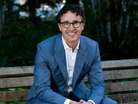
Mining giant Rio Tinto has redrawn its executive structure and operational framework, aligning leadership roles and business units to concentrate resources and decision-making on the company’s most critical value areas.
The move signals a clear shift in corporate direction, with a new operating model now in effect and a streamlined leadership team in place.
Incoming Chief Executive Simon Trott is tasked with guiding the company through this transition, which puts capital, talent and oversight into three core product groups: iron ore, aluminium, and lithium and copper.
These changes are intended to clarify accountabilities and leadership, focus operational decision-making and increase return on investment across the business.

Leadership moves reshape the C-suite
Simon Trott’s elevation to Chief Executive comes as Rio Tinto adjusts its executive suite to reflect the new structure.
His appointment marks a formal handover from former Chief Executive Jakob Stausholm, who led the company for nearly five years and exits on the back of what he describes as "one of the most extraordinary chapters of my professional life."
Trott now assumes day-to-day executive responsibility for delivery across the group, backed by a narrower leadership layer and product-aligned accountability.
His previous experience leading the iron ore division gives him deep operational familiarity with one of Rio Tinto’s largest businesses.
Alongside Trott’s appointment, several leadership positions shift to match the restructured model. Sinead Kaufman, formerly Chief Executive of Minerals, will leave the company in October 2025.
Her exit follows a 28-year tenure that saw her play a central role in shaping the company’s portfolio, including leading its exit from coal and advancing its lithium strategy.
Kellie Parker’s current role as Chief Executive Australia also comes to an end, with a newly created Head of Australia position now set to take responsibility for external engagement and domestic stakeholder relations.
These leadership transitions are designed to support a flatter, more execution-focused structure that prioritises project delivery and operational clarity.
Iron ore consolidated under single executive leader
Rio Tinto’s largest business unit, Iron Ore, is now under the leadership of Matthew Holcz, appointed Chief Executive Iron Ore.
This new role sees him oversee a consolidated global iron ore operation combining the existing Western Australian mines with the Iron Ore Company of Canada and the Simandou development in Guinea.
The integration of these geographically and operationally diverse sites gives Holcz oversight of both mature production assets and one of the company’s most strategic growth projects.
The idea is to better align operational processes, transfer technical expertise and roll out proven systems, such as its Safe Production System, across the entire iron ore portfolio.
Iron ore remains a critical component in global steelmaking and construction. By unifying its supply chain and tightening leadership focus, Rio Tinto positions itself to offer greater reliability and consistency across its iron ore delivery commitments.
Trott underscores this intent, stating: "A simplified business structure, grounded in our fundamental commitment to safety and with sharper focus on the most compelling opportunities we have, will enable us to deliver new standards of operational excellence and value creation."
Lithium joins aluminium in new downstream group
A key part of the restructure sees Rio Tinto’s lithium assets combined with its aluminium business under the leadership of Jérôme Pécresse. The new group is structured into three operational streams – Atlantic Aluminium, Pacific Aluminium and Lithium – creating a broader portfolio of processing-heavy commodities.
This grouping reflects Rio Tinto’s strategy to manage downstream-intensive operations under a unified leadership team, where productivity measures and technology rollouts can be standardised across sites with shared challenges.
The Safe Production System, credited with previous operational gains, is set to be expanded across this newly defined unit.
From a market standpoint, lithium and aluminium both face rising demand amid global pressures for electrification and low-carbon materials.
Lithium plays an increasing role in battery manufacturing, while aluminium remains a key material for transport and construction sectors.
Bringing these assets together also allows Rio Tinto to centralise its response to environmental, social and governance (ESG) pressures, offering end-users more traceable and ethically sourced materials.
Copper group remains unchanged to focus on energy transition
Rio Tinto retains its copper assets as a standalone product group under the leadership of Katie Jackson. The focus remains on production continuity from Oyu Tolgoi in Mongolia, stabilising operations at Kennecott in the United States and advancing projects in Chile and Arizona.
Copper is critical to energy transition infrastructure, including electricity generation, transmission and storage. With demand set to rise, the company keeps its copper unit distinct to ensure capital, management and technical focus are not diluted.
Outside of the three core business groups, Borates and Iron & Titanium now sit within the Chief Commercial Officer’s portfolio for strategic review, though operations continue without disruption.
With the new structure now operational, Trott’s attention turns to execution. He makes clear that operational delivery and shareholder value remain the primary objectives: "Our focus now is on unlocking further shareholder value, putting both our capital and talent where it will deliver the greatest returns."