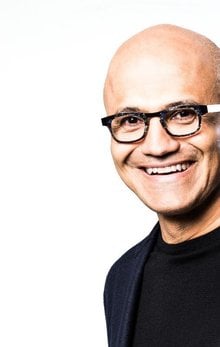
Cisco's CEO on the Leadership Skills Needed for Success

What are the most important skills leaders should build alongside developments in AI?
Speaking on the TBPN podcast, Chuck Robbins, CEO of Cisco shared his opinion on the key leadership traits in the AI era – suggesting that those who are most successful are those who place the most emphasis on the core purpose of their business.
He says: “The people who are wildly successful have this incredible combination: they understand the technology, have high EQ [emotional quotient], and really care about the mission of the team.”
The leadership pipeline at Cisco
With a survey from LinkedIn showing that 79% of recruiters believe finding skilled talent is becoming more challenging, and research from The Conference Board finding that CEO turnover is rising, more businesses are fine-tuning their opportunities for internal mobility to ensure they have leadership-ready talent.
Kelly Jones, Chief People Officer at Cisco, has previously said the company proactively looks for candidates with innate leadership qualities, telling Business Insider: “We want to know, not only have you done these things, but are you intellectually curious? Are you intellectually and emotionally agile? Are you someone who brings your team along with you?”
To nurture these leadership qualities in its employees, Cisco has adopted a talent strategy it refers to as “one company, many careers”, which asks workers to view their career as a set of experiences rather than a straightforward line.
The company has mapped job roles to specific skillsets, helping employees understand how they can develop their capabilities to take on new roles within the company – giving them a well-rounded understanding of company operations as they progress to more senior roles.

As these employees do progress, however, Chuck has said he thinks “the whole interview process is stupid".
Discussing internal mobility on the TBPN podcast, Chuck shared that he believes observing employees in their day-to-day roles is the most accurate way to see how they perform.
He said: “What are we going to learn about them when we sit down in a room for 30 minutes and ask them questions when we can watch them work?”
By doing this, the company is able to see how prospective leaders demonstrate their EQ, technological capabilities and mission-focused approach in a workplace setting.
Chuck has demonstrated this approach in his own career.
On the How Leaders Lead podcast, he shared his progression from Account Manager at Cisco in 1997, all the way up to being named CEO in 2015, saying “I always believed my job everyday was an interview. What I did in my role everyday was showing them I was the right candidate for the next job.”
Building emotionally intelligent leaders for the AI era
Having agile, future-ready leadership in place is critical as AI capabilities develop, according to Chuck.
In conversation with the BBC at the World Economic Forum in Davos, Chuck said that AI will be “bigger than the Internet”, with the companies that fail to adapt likely to see significant losses.
Like Chuck, many CEOs believe that EQ plays a key role in preparing companies for that shift.
Jamie Dimon, CEO of JPMorgan Chase, shared in an interview with Fox News in December that employees should prioritise developing their soft skills to progress in an AI-informed business landscape.
He said: “My advice to people would be critical thinking, learn skills, learn your EQ, learn how to be good in a meeting, how to communicate, how to write. You’ll have plenty of jobs”.
Satya Nadella, CEO of Microsoft, agrees. Speaking on the MD Meets podcast, he said that emotional intelligence is becoming more important as AI handles more technical tasks traditionally taken on by people.
Discussing IQ vs EQ, Satya said: “IQ has a place, but it’s not the only thing that is needed in the world. And I’ve always felt at least as a leader, you know, if you have IQ without EQ, it’s just a waste of EQ.”
According to Satya, by prioritising emotional intelligence, leaders have a unique perspective on AI opportunities and enable new software developments – opening the door to further growth.
Company portals



Executives

Chuck Robbins
Chair and CEO
Jamie Dimon
Chairman of the Board
Kelly Jones
Chief People Officer
Satya Nadella
Chairman and CEO