Google CEO Sundar Pichai Acknowledges Growing AI Concerns

Despite the growing backlash against AI – most notably following the booing of former Google CEO Eric Schmidt by University of Arizona students after the executive praised AI’s potential – current Google CEO Sundar Pichai says young people are right to feel anxious about the growing technology.
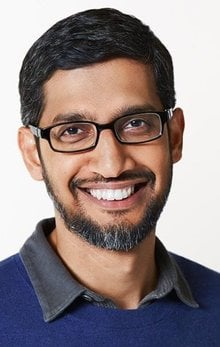
Speaking on the “Hard Fork” podcast, Sundar was asked about his “boo strategy” during his upcoming address at Stanford University in June.
“These graduates are actually both going to be a big part of that driving that progress and also dealing with the impact of that technology,” Sundar said. He added, “I've always been extraordinarily optimistic about the next generation.”
Sundar added that public anxiety around AI is “rightfully” growing and that young people are entering a rapidly changing workforce shaped by automation and emerging AI systems.
He also emphasised that the next generation would experience AI’s impact and also play a part in how the technology develops.

Industry concerns over job opportunities
The backlash to AI integration stems from concerns like job displacement, automation, shrinking entry-level opportunities and corporate layoffs linked to AI efficiency.
According to Business Insider, unemployment among recent graduates has reached a four-year high as companies continue to increasingly adopt AI tools. Several other surveys also suggest young Americans in particular are becoming more sceptical of the technology’s long-term effects on employment and society.
During the podcast, Sundar was asked about a New York Times poll which found that only 16% of people felt positively towards AI, whereas 35% felt negatively.
In response, Sundar said: “AI is always viewed as the most profound technology humanity will ever work on. It's progressing at an extraordinary pace.”
He added that “humans aren't evolved to process that much change” and that people are understandably anxious over what the future holds as this technology becomes more commonly integrated.
“We have more work to do to make sure when we are scaling up the infrastructure investments [and the] the things we can do to make some of that work better.”
AI Technology as a driver of innovation
Despite concerns from graduates and critics across the wider industry, Sundar continued to defend the potential of AI’s long-term benefits.
He argued that major technological shifts have historically improved living standards and pushed innovation forward, even if the transition periods were uncomfortable.
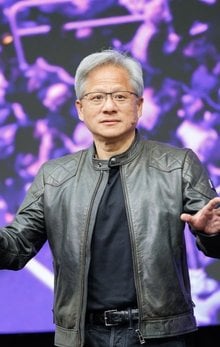
NVIDIA CEO Jensen Huang has previously mirrored these views, also indicating that this shift in technology isn’t unlike previous shifts in history.
“There’ll be more people working at the end of this industrial revolution than at the beginning of it,” Jensen said, talking to graduates at Stanford University.
Sundar added to this discussion of industry shifts and emphasised that the overall decision-making would always be down to the people behind the technology. He admitted that the tech industry had not done enough to explain AI’s benefits clearly to the public.
He added: “I think we as an industry have to do a lot more to continue driving and showing the benefits that's possible with technology.”


Executives
Jensen Huang
Founder and CEO
Sundar Pichai
CEO