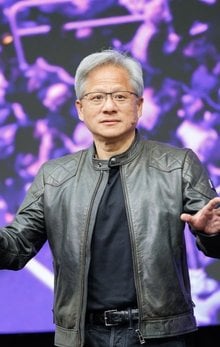
NVIDIA's Jensen Huang: Leading Through AI Disruption

Jensen Huang, Founder and CEO of NVIDIA, wants business leaders to reconsider their approach to artificial intelligence in the workplace. Despite widespread concerns about job displacement, Jensen argues that his three decades of leadership experience proves technology creates opportunity rather than eliminates it.
Research from Reuters and Ipsos found that 71% of Americans are concerned AI will cause permanent job loss. However, Jensen believes this fear is misplaced. Speaking on the Lex Fridman podcast, he emphasised the importance of distinguishing between job purpose and the tools used to accomplish work.
"I'm the longest-running tech CEO in the world: 34 years. The tools that I've used to do my job have changed continuously in the last 34 years, and sometimes quite dramatically," Jensen tells the Lex Fridman podcast.
He says that it is important to acknowledge "that people are really worried about their jobs," but wants to "remind them that the purpose of your job, and the tasks and tools that you use to do your job, are related, not the same."

Leadership through technological transformation
At NVIDIA GTC 2026, he shared insights into how AI adoption has affected his own workload as Chief Executive. The technology has made him "busier and busier" as projects accelerate across the organisation.
According to Jensen, historical precedent supports his optimistic outlook. "A lot of people are saying AI is coming, we're going to run out of jobs – but it's exactly the opposite," he said. "The fact of the matter is PCs made us more busy, the internet made us more busy, mobile devices made us super busy… AI is going to get tasks done super fast… my sense is that AI is going to cause us to be able to do things so fast we're going to end up doing more."
Jensen explained that "work gets done faster, all of the projects are moving faster" as NVIDIA implements more AI technology across its operations. The company's workforce expansion reflects Jensen's confidence in AI creating rather than eliminating roles.
NVIDIA grew from 29,600 employees at the end of fiscal 2024 to 42,000 by March 2026, AI adoption accelerating the company's ability to take on new projects and expand its operations across multiple sectors.
A strategic vision for AI growth
Jensen's strategic vision extends beyond workforce management. At GTC, he predicted AI use will lead to US$1tn in orders by 2027. The CEO outlined how continuous innovation at NVIDIA aims to deliver "continuous cost reduction of accelerated computing over time" to customers.
"This combination of dynamics is what makes NVIDIA architecture expand its reach, accelerating its growth at the same time driving down computing costs. Which ultimately encourages new growth," he said. Jensen described this as a "virtuous cycle" where new developments can reach millions of users.

Jensen's leadership has positioned NVIDIA at the forefront of AI development. When questioned about the timeline for achieving AGI – artificial general intelligence – he stated that he believes NVIDIA has already "achieved AGI."
This assessment differs from other industry leaders. Demis Hassabis, CEO of DeepMind, told attendees at the AI summit in New Delhi that he believes it will take five to 10 years before the technology is fully developed and utilised.
Jensen clarified that AGI currently works in specific scenarios. He provided an example of how AI could autonomously create "a web service, some interesting little app that all of a sudden a few billion people used for 50 cents, and then it went out of business again shortly after," demonstrating the technology's potential to rapidly develop and deploy solutions at scale.
Company portals

Executives
Jensen Huang
Founder and CEO