What Can Global Leaders Learn From the 'Woodstock of AI'?
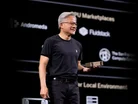
The San Jose Convention Center has once again become the global focal point for all that’s hot in tech, as NVIDIA’s GTC 2026 rolled into the venue.
Far from its origins as a niche developer conference, the event – frequently described by attendees as the “Woodstock of AI” – serves as a key strategic forum on the annual events list for C-suite leaders looking to define the next decade of industrial and digital growth.

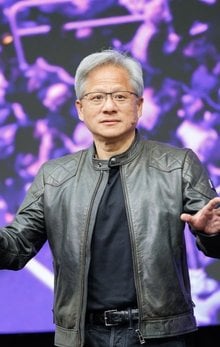
With NVIDIA aiming for a historic US$1tn sales milestone by 2027, its focus has shifted from mere chip performance to the physical infrastructure required to sustain an AI-driven world.
For the company and its customers, this focus revolves around a set of core priorities including managing the transition to NVIDIA’s Vera Rubin architecture, solving the escalating power and cooling crisis, and moving AI from experimental labs into large-scale, autonomous production.
CEOs and leaders at some of the world’s largest companies have been sharing their thoughts during and post event, particularly around how collaboration with NVIDIA is driving their businesses forward.
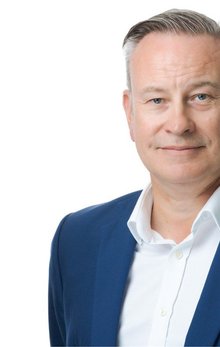
Olivier Blum: scaling sustainable infrastructure
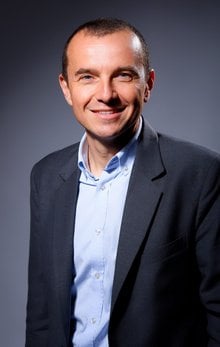
For Schneider Electric, the conversation has moved beyond silicon to the power grid itself. Olivier Blum, Executive Vice President, argues that the success of any AI strategy is now inextricably linked to energy management.
Schneider is collaborating with NVIDIA on the Vera Rubin NVL72 reference design to address the skyrocketing compute densities that threaten to overwhelm traditional data centres.
Olivier says the industry is rapidly moving towards coordinated energy systems, noting: “One of the clearest signals coming out of NVIDIA GTC this week is how quickly the industry is moving toward a more connected model for AI infrastructure.”
The pioneering use of digital twins and agentic AI solutions, he says, will be critical in reducing manual risk in increasingly complex industrial environments.
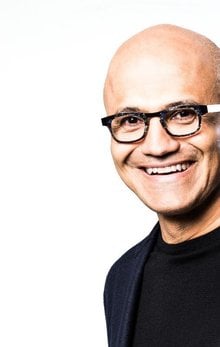
Satya Nadella: pioneering the Rubin architecture at Microsoft
Largely as a result of CEO Satya’s leadership, Microsoft remains firmly at the forefront of the next hardware cycle.
Satya has confirmed that Azure is the first global cloud provider to operationalise the NVIDIA Vera Rubin NVL72 system.
This 100% liquid-cooled solution is designed to handle the most intensive Large Language Model (LLM) workloads, offering a five-fold increase in inference performance over previous generations.
By moving these systems into immediate validation, Satya is positioning Microsoft to provide its enterprise clients with Rubin-based capabilities within months, setting a new benchmark for cloud-based AI infrastructure.
Elon Musk: commitment to scale at Tesla and SpaceX
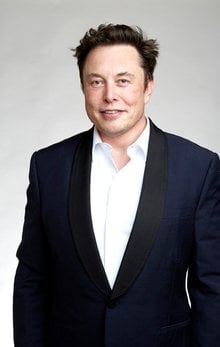
Despite his companies’ significant investments in proprietary silicon, Elon Musk utilised the summit to reinforce his continued reliance on NVIDIA’s ecosystem.
Addressing his massive following on X, Elon praised NVIDIA’s market position and leadership under Jensen Huang.
Elon confirmed that both Tesla and SpaceX intend to continue purchasing NVIDIA hardware "at scale."
For the broader market, this endorsement from one of the world's most aggressive technology buyers serves as a powerful validation of NVIDIA's roadmap through 2027.
Adrian McDonald: the economics of 'tokens as a service'
From a Dell Technologies perspective, the summit has highlighted a fundamental shift in business models.
Adrian McDonald, President of Dell Technologies EMEA, suggests that as AI becomes a core component of government and enterprise services, we are entering the era of "tokens as a service."
For senior leaders, the new KPIs are defined by "tokens per watt" and "cost per token."
Adrian emphasises that Dell’s role is now focused on the practical economics of AI – helping organisations transform raw power into measurable revenue by deploying full-stack AI capabilities across their global operations.
David Brown: moving AI into global production
AWS is leveraging GTC 2026 to showcase the massive scale of its 15-year partnership with NVIDIA.
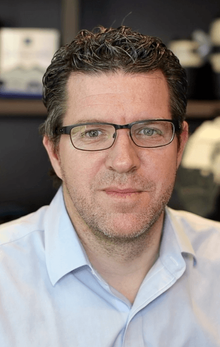
David Brown, Vice President of Compute and Networking, outlined a roadmap that involves deploying over one million NVIDIA GPUs across AWS Regions.
Brown’s message to the C-suite is one of pragmatism: the real value of AI lies in production, not experimentation. To facilitate this, AWS is prioritising "agentic AI", systems capable of autonomous reasoning, and integrating specialised libraries to accelerate data movement across its vast global network.





Executives
Adrian McDonald
President Dell Technologies EMEA
David Brown
VP of Compute and ML Services
Elon Musk
Tesla CEO
Jensen Huang
Founder and CEO
Olivier Blum
Chief Executive Officer
Satya Nadella
Chairman and CEO