
Schneider Electric CEO Olivier Blum: Energy and AI at Davos

World leaders from business, government, civil society and academia are convening in Davos for the World Economic Forum’s 56th Annual Meeting.
From 19-23 January, leaders will come together to discuss global issues and challenges, call for bold collective action and set key priorities.
The programme is structured around five core issues facing businesses and society: cooperation in a complex world, unlocking new sources of growth, how to better invest in people, driving greater prosperity and deploying innovative technologies at scale.
The latter remains a key boardroom priority, particularly the rapidly evolving narrative around AI development, adoption and operation.
According to the WEF, AI is expected to add over US$15tn to global GDP by 2030. Its research also finds that nearly 90% of businesses across all sectors expect the technology to transform the way they operate in the short term.

Olivier Blum, CEO of global energy management and automation firm Schneider Electric has set out a clear message for those attending Davos: the projected pace and scaling of AI will not happen without transforming the way we manage and deliver energy.
On LinkedIn he says: “The defining paradox of 2026 is becoming clear: we cannot have the intelligence of the future with the infrastructure of the past.
“This week, I’m joining global leaders at the World Economic Forum in Davos. My message is simple: there is no AI at scale without energy intelligence.”
Dealing with explosive AI demand
Writing in a WEF blog post on 19 January, Olivier explains how the convergence of electrification, automation and digital intelligence is transforming the global energy landscape.
The challenge for leaders, he says, is solving a paradox of energy demand growth versus energy system constraints.
“AI is redefining the global energy infrastructure,” Olivier says. “The world’s largest AI data centres currently consume as much power as some cities. And global data centre electricity demand is expected to double to 945 TWh by 2030, according to the International Energy Agency.
“AI is the digital engine of growth, but it is also a massive consumer of one of the world’s most in-demand resources – energy,” he explains. “And here’s the twist: AI is also the very technology we need to optimise the energy, infrastructure and systems it is powering.”
Solving this challenge, says Olivier, is no longer “green versus dirty”, but rather, a choice between global growth or stagnation.
Resilience, efficiency and leadership
The world faces a data and intelligence challenge, says Olivier. The modern energy landscape is decentralised and omni-directional, with offices, buildings and homes being active participants in the flow of energy and information.
To meet this challenge requires energy systems that are electrified, automated and integrated with digital intelligence.
“Energy and industrial firms need AI that is deeply embedded in the physical and digital worlds,” Olivier explains, adding that while this energy technology is already enabling unprecedented capabilities today and it will enable even more in the future, including:
- Using less energy
- Realising the new energy landscape
- Enhancing complex energy and automation systems
- Enabling autonomous energy systems
- Powering solutions across the energy system lifecycle.
To those leaders attending Davos, Olivier calls for “a new era of energy intelligence”.
“AI has become both the digital engine for growth and a massive consumer of the world’s most in-demand resources,” he says. “The resulting defining moment requires an immediate, collective response.
“The future belongs to those advancing energy technology and making efficiency and resilience the standard for every breakthrough. This is the only way to turn complexity into our greatest global opportunity.”

What is Schneider Electric’s energy strategy?
In December 2025 Olivier set out Schneider Electric’s strategic plan to help deliver a smarter and more sustainable energy future in which AI and other technologies are used to create value.
Speaking at the company’s Capital Market Day event, he explained how the business is using innovation to help industries and businesses drive efficiency and sustainability.
“We are taking Schneider to the next level of energy and industrial intelligence, the next level of recognition and the next level of cost competitiveness and scalability to capture the opportunities in electrification, automation and digitalisation now and in the future,” he told those at the event.
In October 2025, Olivier touched on the increasingly complex global energy landscape and how shared action will be key to delivering transformation, echoing the sentiment at the heart of his WEF blog.
At Schneider Electric’s Global Innovation Summit in Copenhagen, he told an audience of businesses, policy makers and close to 600 C-level executives: “A lot of things are changing in the world, but one thing that shouldn’t change is the profound commitment we should all have to the energy and climate transitions.
“Preparing a better future for the next generation is our collective responsibility.”
Company portals


Executives
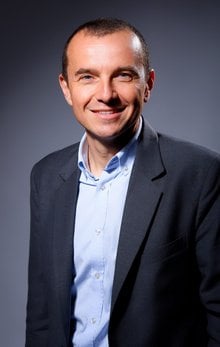
Olivier Blum
Chief Executive Officer