
How Adobe Will Scale AI After CEO Shantanu Narayen’s Exit

After nearly two decades of leadership, Shantanu Narayen has announced he is stepping down as Adobe’s CEO.
Shantanu has held the position since 2007 and was one the key software engineers behind Adobe’s founding, transforming the platform from a page description language developer into a globally-recognised design software company with an annual revenue of more than US$20bn.
He also played a key role in transforming the company’s business model, redirecting it from traditional software licensing to subscription-based services with the Adobe Creative Cloud application bundle.
The company has initiated plans to identify his replacement, with Shantanu staying on as CEO until a successor is found.
Following his departure, Shantanu will continue to serve as Chair of the company, assisting in the leadership transition and supporting the company’s next CEO.
Speaking publicly on his decision, Shantanu says: “What attracted me to Adobe 28 years ago was our leadership in creating new market categories, world-class products, a relentless desire to innovate in every functional area of the company and the people I met during the interview process.
“We have continued to create new markets, deliver world-class products, drive innovation in everything we do and attract and retain the best and brightest employees.”
Scaling AI under new leadership
Adobe’s annual revenue from AI-powered products has more than tripled since its early implementation in 2016. That year, Adobe launched Sensei, an AI and machine learning program that acted as a prototype for software tools and generative programs like Adobe Firefly.
Shantanu’s departure comes at a pivotal time for Adobe, with the company expanding its investment into generative AI tools throughout its creative and marketing software products.
Adobe has been using AI as a tentpole to pivot its business strategies around. The company has been implementing new platforms to offer tools like image, video and design generation through prompts, with the intention to improve traditional editing workflows.

Shantanu says Adobe’s “Empower Everyone to Create” mission will utilise AI tools to make creativity more accessible and enable creation across all media types and platforms.
“The next era of creativity is being written right now — shaped by AI, by new workflows and by entirely new forms of expression,” he adds.
Impact on current business strategy
As Shantanu steps back and Adobe continues to invest in AI tools and partnerships, such as its recent plans to advance creative AI with Google Cloud, the uncertainty around future leadership and ROI on AI is drawing hesitation from investors.
Grace Harmon, an analyst at Emarketer, says: "Investors will likely focus on whether incoming leadership maintains a balance between disciplined execution and aggressive AI investment, especially as competition in creative and enterprise AI intensifies.”
Investor apprehension over the company’s AI and leadership strategies are reflected in Adobe’s current market share, falling by 26% in 2026 so far. However, Adobe delivered a record first-quarter in 2026 with a company revenue of US$6.4bn, representing a 12% year-over-year growth.
“We grew from 3000 employees to 30,000 employees, delivered technology that touched billions of people as customers of our products or the digital experiences that our customers create, leading to our revenue growing from US$1bn to US$25bn,” Shantanu adds.
“The opportunity in front of us is extraordinary. Together, we are uniquely positioned to lead it — and I remain deeply committed to doing so as we look ahead and prepare to name Adobe’s next CEO.”


Executives

Grace Harmon
Analyst
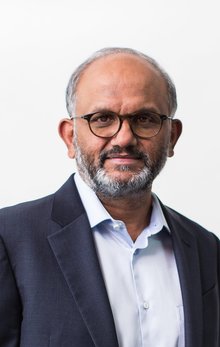
Shantanu Narayen
CEO