
How Supply Chain Crisis Has Tested Intel's Leadership
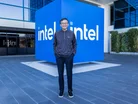
When CEO Lip-Bu Tan stepped into the role at Intel in March 2025, he inherited more than a challenging environment centred around financial losses at the business, manufacturing setbacks and a race to catch up on the rapid pace of AI development.
The company's latest financial results reveal a company that is beginning to stabilise and a demonstration of why operational excellence, not just strategic vision, ultimately determines whether a turnaround succeeds or stalls.
Intel's fourth-quarter performance, published on 22 January show that the company exceeded its earnings expectations yet saw its market value decrease by 13%, despite progress in chip manufacturing and AI-driven sales.
Strategic decisions under supply pressure
The challenges facing Lip-Bu's leadership team can be traced directly to supply constraints that undermined forward guidance.
For the current quarter, Intel projected revenue between US$11.7bn (£9.4bn) and US$12.7bn (£10.2bn) with breakeven earnings – figures that fell short of analyst forecasts and exposed the vulnerability of even well-conceived strategic pivots when operational fundamentals falter.
Chief Financial Officer David Zinsner acknowledges that seasonal demand patterns were being constrained by production capacity limitations. "We don't have the supply we need for Q1, but that should improve by the second quarter," he told CNBC.
His admission highlighted a strategic dilemma familiar to executives across capital-intensive industries: how to manage stakeholder expectations when multi-year transformation timelines collide with quarterly reporting cycles.
For Intel, this supply challenge represents more than a temporary bottleneck, it reflects years of uneven execution in chip manufacturing as the company attempts to reclaim process leadership from competitors including Taiwan Semiconductor Manufacturing Company (TSMC) and Samsung.
Leadership transitions and market expectations
Lip-Bu's tenure marks a decisive shift in strategic priorities, with renewed emphasis on recapturing market share, restructuring the foundry business and competing more aggressively across multiple segments.
This earnings announcement served as his first major test with investors, revealing both progress and persistent weaknesses in execution.
The CEO concedes that while production efficiency – measured through chip "yield" rates – was improving according to internal benchmarks, performance still lagged behind his expectations.
"Our yields are in line with our internal plans," Lip-Bu said on the earnings call, "but they're still below what I want them to be." This candid assessment signals a cultural shift towards accountability, yet it also underscored the operational challenges that extend Intel's recovery timeline beyond investor patience thresholds.
Market sentiment heading into the results had been buoyant, with Intel's stock more than doubling between 2023 and 2024 on optimism surrounding its next-generation 18A manufacturing technology and potential foundry partnerships.
That enthusiasm dissipated rapidly when Lip-Bu declined to announce new anchor customers, instead emphasising that Intel was "working aggressively" to expand supply capabilities.

Balancing portfolio performance across segments
Intel's Data Centre and AI division provided evidence that elements of the strategic repositioning are gaining traction.
Revenue in this group climbed 9% year-on-year to reach US$4.7bn (£3.8bn), driven by demand for server processors powering AI infrastructure. Intel's Xeon processors have become beneficiaries of the global surge in AI-driven computing requirements.
Lip-Bu emphasised the strategic importance of this positioning on the earnings call: "Our central processing units (CPUs) are becoming more critical to systems built for AI."
This approach – combining traditional CPU performance with specialised AI acceleration capabilities – proves decisive as cloud providers and enterprises prioritise energy-efficient computing platforms. The challenge for leadership is whether this growth trajectory can offset weakness elsewhere in the portfolio.
The Client Computing Group, encompassing laptop processors, declined 7% year-on-year to US$8.2bn (£6.6bn), illustrating how consumer PC market pressure persists even as enterprise and AI demand strengthens.
This divergence creates portfolio management complexities for Intel's executive team, requiring careful resource allocation decisions between defending legacy positions and investing in emerging opportunities.
The coming quarters prove defining for Lip-Bu's strategic agenda. Improving manufacturing yields and securing foundry commitments represent critical validation points for the turnaround strategy.
However, the combination of conservative guidance and ongoing production challenges suggests Intel's recovery may test investor patience for some time yet.
Company portals

Executives

David Zinsner
Chief Financial Officer
Lip-Bu Tan
Chief Executive Officer