Why Are Leaders Challenging Emissions Reporting Standards?

A coalition of 30 leading industrial and utilities firms has joined the Last Green Gas Count campaign, urging the Greenhouse Gas Protocol to formally acknowledge market-based instruments for renewable gases like biomethane.
In a joint letter released before COP30 the group takes aim at the influential GHG Protocol framework.
This framework informs the sustainability reporting of 97% of Fortune 500 companies but currently prevents them from reporting the use of green gas certificates to lower their emissions.
The move coincides with the Brazilian COP Presidency's commitment to increase the production and application of renewable fuels, which includes gases, by 2035.
Decarbonisation challenges for heavy industry
For sectors where decarbonisation is a major challenge, representatives from heavy industry assert that existing accounting standards are hindering progress in areas where electrification is not technically or economically viable.
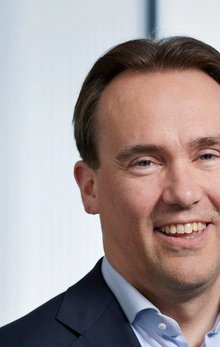
Albert Kassies, Director of New Energy at Tata Steel Nederland – part of the global Tata Steel Group – highlights the issue.
He says: "Our company strongly believes that biomethane can play a big part in decarbonising steel and energy-intensive industries. Before this is the case some hurdles need to be taken down. Biomethane not being supported in the Greenhouse Gas Protocol is one of them.
"As decarbonisation projects for hard-to-abate industries are long and complex it is essential that enabling conditions for these projects are brought in place as soon as possible."
Expanding support across transport and consumer goods
The push for change extends beyond heavy industry, with the heavy-duty transport sector pointing to the benefits of biomethane for reducing emissions in both manufacturing and vehicle operations.
Lars Mårtensson, Environmental Director at Volvo Trucks, explains: "When the GHG Protocol recognises renewable gas certificates the market for renewable gases can grow more quickly, which will speed up the decarbonisation of industrial operations and heavy truck transports."
Leading consumer goods companies are also seeking improved guidance on certification.
Pernod Ricard is one such company. "Where direct biomethane delivery isn't efficient we will rely on Renewable Gas Guarantees of Origin (RGGOs) to ensure traceability and credibility,” says EVP of Integrated Operations Maria Pia De Caro.
“Clear guidance from the GHG Protocol will be essential to scale this approach globally.”

Aligning policy ambition with market reality
Despite an increase in supportive policies, with over 50 new measures introduced globally since 2020, a wide gap remains between potential and actual use.
According to the International Energy Agency's 2025 Outlook for Biogas and Biomethane only about 5% of the sustainable production potential is being realised.
The European Union already identifies renewable gases, including biogas biomethane and e-methane, as key to decarbonising its economy and enhancing energy security.
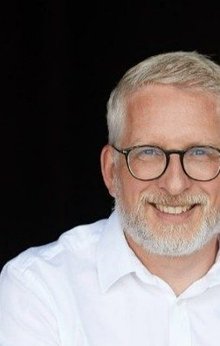
Andreas Guth, Secretary General of Eurogas and coordinator of the Let Green Gas Count campaign, described the upcoming revision of the protocol as "a prime opportunity to bring the Protocol up-to-date and boost investor confidence in biogas biomethane and derivatives around the world."
The Let Green Gas Count campaign, which is coordinated by eight bodies including the European Biogas Association and the World Biogas Association, is calling for the GHG Protocol to take three specific actions.
The coalition is requesting an interim statement acknowledging the need for strong market-based instruments and for the protocol's review to be accelerated from its planned 2028 completion date.
The campaign contends that certification schemes are crucial for verifying the environmental credentials of renewable energy.
This latest action follows a letter sent in February 2025 by over 230 organisations to the GHG Protocol governance bodies which has not yet received a response.
Company portals




Executives
Albert Kassies
Director New Energy

Andreas Guth
Secretary General
Lars Mårtensson
Director Environment and Innovation
Maria Pia De Caro
EVP, Global Operations and Sustainability