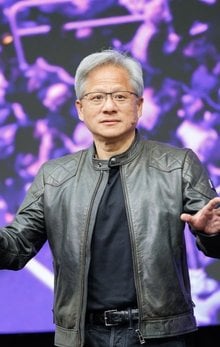
Jensen Huang: The Family Lessons That Shape His Leadership
Many CEOs learn how to lead from their predecessors or lessons in the corporate world that create their own list of dos and don’ts. But Jensen Huang's leadership icon was much more personal: his mother.
The Nvidia CEO delivered a talk at The Cambridge Union at the start of November, where he shared how his parents’ pursuit of success in the US, and the encouragement they gave him when he was a child, has stuck.
He said these lessons laid the foundation for his work ethic in building his own company, and he often reminds himself to take the same approach at Nvidia.
Jensen said: “My mum taught me English, and she doesn’t speak English. And that kind of tells you all", describing how she used a “piece of paper and a dictionary” to teach him the language.
“In a lot of ways that kind of defines Nvidia, kind of defines me,” he said. “I approach almost everything from the perspective of, ‘How hard can it be’”.
During his visit to The Cambridge Union on 4 November, Jensen received the Professor Stephen Hawking Fellowship 2025, an award given to individuals who have made a significant impact to science, technology and communications.

From an idea to a trillion dollar company
Jensen was born in Taiwan in 1963 and his family then moved to Thailand before he and his older brother were sent to the US for their education.
“My parents wanted us to pursue the American Dream,” Jensen said. “They didn’t have very much, they were quite modest, and moving to the United States was quite difficult for us in 1973, but somehow we made our way through it.
“I think the life of struggle, endeavour, nothing for granted, having to earn anything, I think that was good CEO training.”
He went on to study at Oregon State and Stanford University, with his mother insisting that he was “special” and instilling the belief in him that he could achieve if he wanted to.
Jensen co-founded the company in 1993, at 30-years-old, alongside his friends Chris Malachowsky and Curtis Priem, taking it public in the late 1990s.
Of all places to launch a company, Jensen chose a dining booth at the fast-food chain Denny’s.
Without a business plan, he said, he had to learn his leadership and management skills on the job. He said he was made CEO because the other two “didn’t want the job”.
The sacrifices of a CEO
Jensen told the Cambridge audience that, although this decision gave him the top spot, “to be a CEO is a lifetime of sacrifice”.
He added: “Most people think that it’s about leading and being in command and being on top. None of that is true. You’re in service of the company.
“You’re creating conditions for other people to do their life’s work, you’re inspiring through example. Most of the examples are making difficult decisions during very difficult times, it’s mostly about sacrifice.”

Jensen said that leading on strategy is what being CEO is all about and that means "choosing what to do" as well as “choosing what not to do, which is sacrifice”, and that “the determination, the conviction, the pain and suffering that goes along with overcoming obstacles, that’s all sacrifice”.
In a 60 Minutes interview in 2024, Jensen was asked if “perfectionist” and “not easy to work for” were accurate descriptions of him, saying they fit him “perfectly”.
He added: “It should be like that. If you want to do extraordinary things, it shouldn’t be easy.”
Company portals

Executives
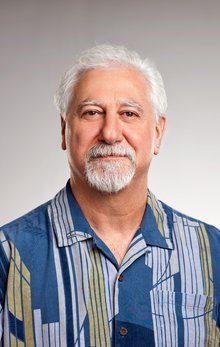
Chris Malachowsky
Founder and Partner
Jensen Huang
Founder and CEO