Nvidia CEO: US AI Infrastructure Gap Threatens Edge
The decisions being made today by technology leaders could determine whether the United States maintains its competitive position in artificial intelligence infrastructure, according to warnings from one of the sector's most influential chief executives.
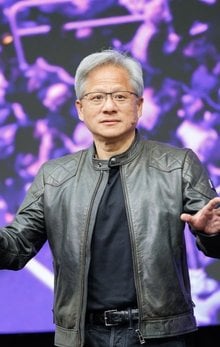
Jensen Huang, CEO of Nvidia, has highlighted what he describes as a growing infrastructure gap between the US and China, focusing on two key enablers that underpin AI deployment: construction velocity and energy capacity.
Speaking with John Hamre, President of the Centre for Strategic and International Studies, Jensen outlined the challenges facing American executives as they navigate substantial infrastructure demands.

Construction velocity creates risk
The timeframe required to deliver large-scale digital infrastructure in the US could mean missed opportunities for organisations racing to deploy AI capabilities. Jensen contrasted American construction timelines with China's ability to mobilise resources at speed.
"If you want to build a data centre here in the United States from breaking ground to standing up a AI supercomputer is probably about three years. [China] can build a hospital in a weekend," he said.
For C-suite leaders developing AI strategies, this gap presents a fundamental planning challenge. The ability to rapidly scale compute capacity could influence competitive positioning, particularly for organisations operating in markets where first-mover advantage matters.
Jensen's observations suggest that planning must now account for multi-year infrastructure lead times that may not align with the pace of technological change or market demand.
Energy capacity shapes long-term planning
Beyond construction speed, Jensen raised concerns about national energy availability, framing it as a constraint that could limit options for data centre operators.
He noted that China's energy capacity is roughly double that of the US, despite America's larger economy: "China has twice as much energy as we have as a nation and our economy is larger than theirs."
Jensen observed that whilst China's energy capacity continues to rise sharply, growth in the US remains relatively flat. For executives planning multi-gigawatt facilities, access to predictable power commitments is becoming as important as securing advanced semiconductors.

Technological leadership requires deployment capability
Despite infrastructure concerns, Jensen emphasised that the US retains a clear technological lead in AI chip design and manufacturing. He described Nvidia as "generations ahead" of China in the processes that underpin modern AI systems.
However, Jensen cautioned against assuming this advantage is permanent. "Anybody who thinks China can't manufacture is missing a big idea," he added.
His comments reflect a tension: technological superiority alone may not sustain competitive advantage if infrastructure deployment cannot keep pace.
Jensen also pointed to potential policy shifts under President Donald Trump's administration, suggesting that political momentum around reshoring and AI investment could support domestic production and infrastructure development.
Capital deployment accelerates across sector
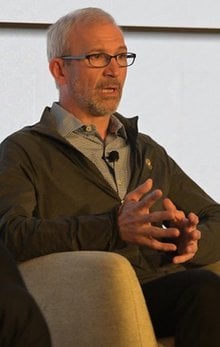
The need to build AI infrastructure is driving substantial capital deployment across the US data centre sector. Raul Martynek, CEO of DataBank, outlined the scale of investment underway to support growing AI workloads.
"In the US, we think there will be 5 to 7 gigawatts brought online in the coming year to support this seemingly insatiable AI demand," he said, according to Fortune.
Raul estimates data centre costs at between US$10m and US$15m per megawatt. With smaller facilities typically requiring around 40 MW, the projected 5 to 7 GW of new capacity could represent roughly US$50bn to US$105bn in capital expenditure.
These figures underscore the complexity facing executives: aligning AI adoption timelines with construction capacity, energy availability and supply chain resilience whilst managing some of the largest infrastructure investments their organisations may undertake.


Executives
Jensen Huang
Founder and CEO
Raul Martynek
CEO