Ramon Laguarta: PepsiCo Q1 2026 Revenue Exceeds Expectations
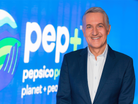
On 23 April, PepsiCo announced that its earnings and revenue for Q1 2026 exceeded analyst expectations, following its struggling North American food business returning to volume growth for the first time two years after the company cut prices on major snack brands.
Against Wall Street’s expected predictions, the company reported US$1.61 compared to an expected US$1.55 and a revenue of US$19.44bn against an expected US$18.94bn.
In a press release on PepsiCo’s first quarter earnings for 2026, Chairman and CEO Ramon Laguarta says: “We are pleased with our first-quarter results, which featured an acceleration in both net revenue and organic revenue growth – with a notable improvement in convenient foods organic volume.
“An extensive commercial agenda, which includes the restaging of large global brands, innovation activity and certain affordability initiatives, is being executed well and business performance improved.”
PepsiCo enacted price increases to combat inflation in the aftermath of the COVID pandemic. The company hiked prices by double-digit percentages for eight consecutive quarters in 2022 and 2023 before settling into more moderate price increases.
This affected sales, with consumers opting for cheaper snack options owned by PepsiCo, such as Frito-Lays. Company-wide changes like this resulted in PepsiCo’s market value falling by US$40bn in 2023.

Winning back consumers
For the first time in two years, PepsiCo’s North American food business reported an increase in volume.
The division, a combination of its North American Frito-Lay and Quaker Oats segments, faced criticism from consumers for price increases when inflation spiked in 2022.
In September 2025, activist investor Elliott Investment Management took a US$4bn stake in the company and pressed for larger price cuts.
PepsiCo agreed and in February, the company cut prices on brands like Lay’s, Tostitos, Doritos and Cheetos by as much as 15% in an effort to win back consumers.
The company also attributed financial growth and an increase in consumer interest to its recently created, healthy-alternative products such as Cheetos NKD, Smartfood FiberPop and Doritos Protein, across the US and internationally.
It also saw new customers following its recent acquisition of Poppi, a gut health beverage and a new lower-sugar version of Gatorade that features no artificial ingredients.
On 16 April, PepsiCo announced plans to shift Gatorade’s packaging and marketing to focus more on hydration for general consumers and less on athletes.
“So two types of consumers are coming into the category, because both of a stronger core and also innovation,” Ramon said on 16 April during a conference call, discussing health-focused consumer trends.
“I think we’re going to continue to play both levers.”
International growth amid conflicts
Outside of the US, PepsiCo’s international business is also experiencing growth.
The company’s Asia Pacific and Europe, Middle East and Africa food divisions both reported volume growth of 9%.
Despite global challenges brought about by conflict in the Middle East, Ramon told Yahoo Finance in April that Pepsi has no intention of pulling back on its global spending, saying the company has a “very resilient supply chain”.
For 2026, Pepsi has stated that organic revenue will rise between 2% and 4% and core constant currency earnings per share will increase in a range of 4% to 6%. However, it also noted that the global economy has become harder to predict due to foreign conflicts.
Steve Schmitt, PepsiCo’s CFO, discussed ongoing growth and conflicts affecting company supply chains during the earnings call, saying: “As we look ahead, the macroeconomic environment has become more volatile and uncertain because of ongoing geopolitical conflicts.
“Systematic commodity hedging programs for market traded commodities are expected to provide some near-term protection and visibility on certain input costs.”