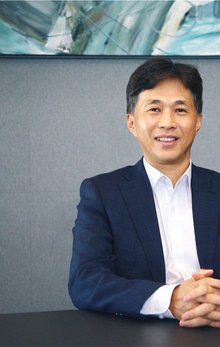
SK Hynix CEO: Chip Demand has Overtaken Supply Capacity
SK Hynix CEO Kwak Noh-jung says that 2027 will see the most severe memory supply the tech industry has ever seen and that demand will continue to surpass what the company can produce for years to come.
“We forecast that next year will be the worst year in the industry's history from the supply perspective," Kwak says.
“Our customer demand continues to go up, while our capacity has limitations. We still forecast that customer demand will remain higher than our supply capacity even beyond 2030.”
He also says that customer behaviour has highlighted how buyers are locking in for long-term agreements as they do not see any change in this supply-demand imbalance coming any time soon.
Future business ventures
Despite discussions of future supply uncertainty, SK Hynix made its official debut on the stock market last week, with a US megalisting of shares that was seven times oversubscribed.
The tech firm says it plans to use the resulting capital for potentially two more construction projects in South Korea – a fabrication hub in Yongin and an advanced packaging facility in Cheongju.
Kwak says the company is considering a number of other global sites for future wafer fabrication investment.
“The US, Japan, and Southeast Asia are all under consideration. Nothing has been decided yet. We are evaluating which location can provide the greatest business advantage,” he adds.
Anxiety around the AI bubble
While SK Hynix shares were up 13.3% at US$168.85 last Friday, company shares soon plunged by 15% on Monday, marking one of the worst days for stock trading in company history.
Industry analysts suggest a reason for the fall in shares is down to South Korea’s recent multi-billion dollar investments in the AI chip industry.
Lorraine Tan, Director of Equity Research at Morningstar, says concerns over the AI bubble are growing, with many wondering how to use the costly technology for profit.
She says: “Despite accelerating artificial intelligence adoption, monetisation remains uncertain and profitability for key players, such as OpenAI, appears to be under pressure. Funding is also shifting toward debt or equity, raising concerns about the maintainability of current spending levels.”
If AI spending fails to see a substantial return on investment or if interest in data centre construction wanes, the theoretical bubble could burst and drastically reduce demand for the technology.
The largest first-time sale by a foreign company
Recently, SK Hynix managed to raise US$26.5bn with its American depositary receipt offering, the largest first-time share sale of its kind by a foreign company.
Kwak says this will help the firm collaborate more closely with AI customers and allow it to increase access to AI talent.
He adds that SK Hynix will not rule out the possibility of manufacturing memory chips in the US, but sites would have to meet the company’s requirements for electricity, water and talent.
Kwak says: “We need to move to the centre of AI in the US, to collaborate more closely with them and grow together and contribute to the AI ecosystem.”
Company portals

Executives
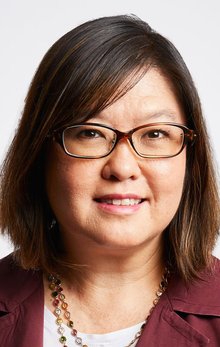
Lorraine Tan
Director of Equity Research, Asia
Noh-Jung Kwak
President & CEO