This Week's Top Five Leadership Stories

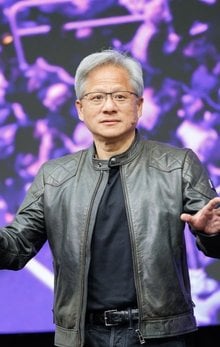
NVIDIA’s US$5tn Valuation Highlights AI Imperatives for CEOs
In October 2025, NVIDIA reached a milestone no other company has ever achieved: being valued at US$5tn.
For CEOs and C-suite executives, this valuation is more than just a market anomaly. Rather, it signals a fundamental shift in how enterprises must approach AI infrastructure investment and edge computing strategy to remain competitive.
Having only reached the US$3tn mark in June 2024, NVIDIA's trajectory offers strategic lessons for business leaders.
The company's pivotal role in enabling real-time AI processing at data sources is transforming decision-making frameworks across industries from manufacturing to autonomous mobility.
For executives weighing capital allocation priorities, NVIDIA's growth underscores the strategic imperative of edge computing infrastructure as organisations seek to reduce cloud dependency while enabling low-latency AI applications.
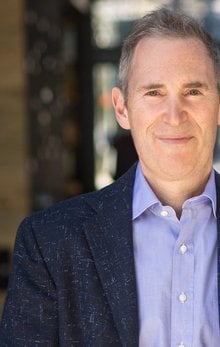
Andy Jassy on 'Working Through' the AI Jobs Transition
Andy Jassy, CEO of Amazon, has shared his perspective on the wide-scale job cuts taking place as a result of developments in AI.
When asked in a CNBC interview about his view on Block cutting more 4,000 jobs as part of an AI-driven restructure, he said that while he hadn’t yet “digested” the news, he does believe that changes like this may become more commonplace.
Saying that he thinks AI “is the most transformative technology shift that we’ve seen in our lifetime”, Andy predicted that many jobs “that we’ve thrown human beings at the last 20 or 30 years, you won’t need as many human beings doing those same jobs.”
Despite this, he suggested that more jobs would be created as a result of AI, saying: “15 years ago, there was no such thing as a cloud solutions architect, and today there are tens of thousands, maybe 100,000 plus, of these types of jobs.
“So we will have lots of new jobs and, you know, there'll be some sort of transition, and we’ll all work through it together.”
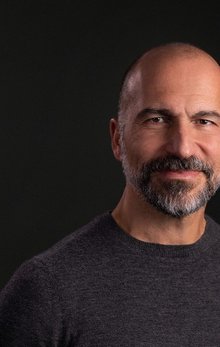
Uber CEO: Hard Work is the Most Important Skill in Life
Dara Khosrowshahi, CEO of Uber, has shared his approach to work expectations at the company, revealing that he expects employees to be available across weekends as part of the company's high-performance culture.
In an appearance on the Diary of a CEO podcast, Dara shares his philosophy when it comes to the company's people strategy.
He says: "Part of working hard is sending emails to the team on a Saturday. And if I don't get a response on Saturday, sending them an email on Sunday with a question mark. 'What's going on?'"
Since becoming CEO of Uber in 2017, Dara has cultivated a culture centred on high performance within the organisation, saying on the podcast. "To me, the most important skill in life is a skill of working hard," he notes.
Why has Santander Changed CEO Before TSB Takeover?
Santander UK has announced the appointment of Nicola Bannister as the new CEO of TSB Bank, following Santander’s acquisition of TSB Banking Group from Banco Sabadell.
Santander UK’s acquisition of TSB Bank was first announced on 1 July 2025, with Santander and TSB’s parent company, Banco Sabadell, agreeing to a £2.65bn (US$3.54bn) all-cash transaction for 100% control of TSB.
Nicola will succeed current TSB CEO Marc Armengol, who will be joining Banco Sabadell Group as CEO following the completion of the acquisition.
Nicola joined TSB in 2022 and has been a member of the TSB Executive Committee since 2024. In addition, she supervised the business transition for TSB since the proposed acquisition in July 2025.
Previously, Nicola worked for Lloyds Banking Group where she acted as Collections Effectiveness Director and Network Director for the Lloyds and Bank of Scotland branch network.
With more than 25 years’ experience in financial services, Nicola has extensive knowledge of insurance, investments, retail and business banking.
She says: "It's an incredible honour to be invited to become Chief Executive of this amazing bank, particularly as we join forces with Santander UK—with the prospect of offering even better banking for customers in the UK.”
What CEOs Need to Know About the US-Iran Conflict
Wall Street’s Volatility Index – which measures the expected volatility of the US stock market over 30 days – has hit a new peak in 2026 following the outbreak of the conflict between the US and Iran in which Iranian Supreme Leader Ayatollah Ali Khamenei was killed.
Research from the Conference Board finds that CEOs are increasingly concerned about the impact of geopolitical tensions on long-term operating environments, with 60% citing it as a high-risk factor for their business.
Jamie Dimon, CEO of JPMorgan Chase, commented on the conflict in an interview with CNBC, saying: “There’s some risk there’s more inflation than people think, and that could be like a skunk at a party if that ever happens”.
In the interview, he cited the inflationary risks present if the conflict goes on longer than anticipated, and the need for businesses to increase investments in their cybersecurity measures.





Executives
Andy Jassy
President and CEO
Dara Khosrowshahi
CEO
Jensen Huang
Founder and CEO

Nicola Bannister
Director of Enterprise Services