Why are OpenAI’s Executives Divided on its IPO?

OpenAI’s potential IPO date, set for sometime in 2026, has created divisions at the executive level, suggesting concerns over the company’s ambitions matching its public readiness.
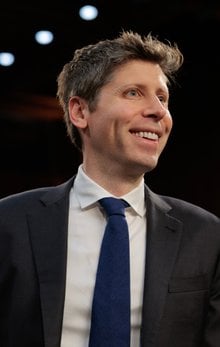
CEO Sam Altman has remained committed to spend US$600bn in the next five years and said he wants the company to go public as soon as the fourth quarter, despite predictions that OpenAI is likely to burn more than US$200bn before it starts to generate cash.
Sam and the company’s CFO Sarah Friar have diverged over the IPO timeline.
According to an article by The Information, Sarah has voiced concerns that the company will not be in a state to go public this year, citing incomplete procedural and organisational work and potential risks from large capital spending plans.

Sarah has also questioned whether OpenAI – which created the ChatGPT dominating the consumer chatbot in the market – will be able to support the company’s massive $600 billion server spending plans, especially as revenue growth slows.
The company recently completed a deal to raise US$122bn from investors, the bulk of which came from Amazon, NVIDIA and Softbank. The funding round later closed at a record-breaking US$852bn valuation.
OpenAI has not stated if the funding announcement would address any concerns raised by Sarah.
Setbacks from leadership changes
Sam and Sarah’s disagreement follows a recent shift in executive leadership at OpenAI.
The company confirmed that longtime Chief Operating Officer Brad Lightcap will transition into a new role focused on special projects, reporting directly to Sam.
Alongside this, OpenAI is dealing with setbacks caused by several leadership departures.
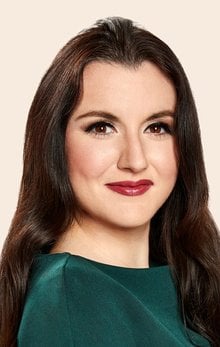
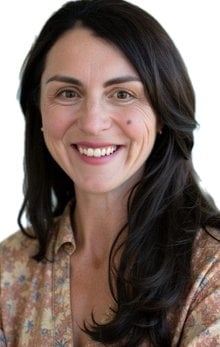
Fidji Simo, CEO of Applications, is taking medical leave to undergo treatment for a neuroimmune condition and Chief Marketing Officer Kate Rouch is stepping down to focus on her cancer recovery.
Despite these executive changes, Fidji and Kate are expected to return to their roles in the near future and OpenAI remains committed to expanding its user base, scaling enterprise products and pursuing a public listing.
The company is also exploring new revenue streams, including potential advertising with its products, while facing increasing competition from rivals like Anthropic.
Benefits of a public company
Unlike Silicon Valley tech companies like Stripe, OpenAI has stated it doesn’t plan on staying a private company indefinitely.
“At our scale, raising equity forever doesn’t make any sense,” Sarah said. You want to start moving down from equity.”
She also pointed to other advantages of going public, noting that OpenAI can use convertible debt and investment-grade debt to fund its constant need for compute.
The company already plans to spend billions over the next few years on semiconductors and data centres.
“Compute is the big competitive weapon,” she added. “Being able to offer more compute is truly a customer experience outcome which will lead to more revenue, more cash flow. And I want to make sure we’re always ready to go tap big markets.”
While her views on compute align with OpenAI’s plans for growth, her different opinion on the desired public offering date has resulted in a divide at the C-suite level regarding infrastructure and investment discussions.
In a joint statement to The Information, a spokesperson for Sarah and Sam said: “We are fully aligned that durable access to compute is at the core of OpenAI’s strategy and a key differentiator as we scale.
“We have both been directly involved in every consequential compute decision over the past year plus.”
Company portals

Executives
Fidji Simo
CEO, Applications at OpenAI
Kate Rouch
Chief Marketing Officer
Sam Altman
Sarah Friar
Chief Financial Officer