Why are Tech Leaders Split Over 2026 Billionaire Tax?
The world’s richest technology executives are divided over California’s proposed billionaire wealth tax, with some signalling a willingness to pay while others appear to be loosening their ties with Silicon Valley or leaving the state altogether.
The proposed measure, known as the 2026 Billionaire Tax Act, would impose a one-off 5% levy on California residents with assets exceeding US$1bn.
Introduced by the Service Employees International Union-United Healthcare Workers West (SEIU-UHW), the tax would apply to wealth rather than income, targeting assets such as businesses, stocks and bonds, artwork, collectibles and intellectual property. Real estate and some pensions and retirement accounts would be excluded.
If the measure wins voter approval, it would cover individuals who were living in California at the start of the year, requiring affected billionaires to settle the charge within five years.
The proposal states: “The purpose of the 2026 Billionaire Tax Act [...] is to protect access to high-quality, equitable health care and to support funding for kindergarten through grade fourteen public education and food assistance programmes.”
The state’s nonpartisan Legislative Analyst’s Office has estimated the tax could raise tens of billions of dollars, but stating the final amount depends on how the billionaires respond and market conditions.
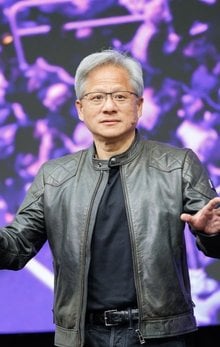
Jensen Huang is in favour
One of the billionaires in question is Jensen Huang, CEO and Co-Founder of NVIDIA. He has emerged as the most prominent tech leader dismissing concerns about the tax.
Speaking to Bloomberg Television on 6 January, he said he was unconcerned about the proposal, even though he could face a bill of more than US$7bn.
“We chose to live in Silicon Valley,” Jensen said. “And whatever taxes I guess they would like to apply, so be it. I’m perfectly fine with it.”
When the interviewer noted that many tech executives were openly discussing the proposed tax, Jensen said: “Not really, not this person.”
This person's trying to build the future of AI.
Nvidia’s leader added that the firm would remain in California because “that’s where the talent pool is”.

Billionaire departures
Jensen’s opinion is not completely agreed with among the tech exec landscape. Larry Page, Google Co-Founder and the world’s second richest person, has reportedly moved business interests out of the state ahead of a possible vote on the tax.
According to filings reviewed by Business Insider, Larry relocated several entities, including his family office, before the end of 2025, and has also personally moved.
With an estimated net worth of US$276bn, according to Bloomberg’s Billionaires Index on 8 January, Larry could face a one-off tax bill of more than US$13bn if the measure was applied, according to multiple sources.
Other tech figures have also signalled departures. Peter Thiel’s investment firm, Thiel Capital, opened an office in Miami in late 2025, and the firm has said that Peter has maintained a residence there since 2020.
David Sacks, President Donald Trump’s AI and Crypto Adviser, announced on X that he was moving to Texas, posting an image of the state’s flag and writing “God bless Texas”.
Whether the tax passes or not, the response from tech’s richest figures suggests California’s relationship with its billionaire class is entering a new phase, creating a growing divide over the cost and value of staying in Silicon Valley.


Executives
Jensen Huang
Founder and CEO