
Why Nokia's CEO Thinks AI is Like the 90s Internet Boom

Business leaders across the globe are using AI to support their workforce, drive product innovation, optimise supply chains and gain a competitive edge in rapidly-changing markets.
Now, Nokia CEO Justin Hotrad says the technology is driving a long-term growth trend that replicates the internet boom of the 1990s.
His remarks come amid a growing debate over whether the AI investment surge is sustainable.
The CEO said in an interview with Reuters: “I fundamentally think we’re at the front end of an AI supercycle, much like the 1990s with the internet.”
At Salesforce’s annual technology event, Dreamforce, on 17 October, Sundar Pichai, CEO at Google, said big tech firms will continue to compete and release AI developments. He compared the movement to the social media spiral that followed the introduction of YouTube and Facebook in the early 2000s.
Demand for data centres is rising sharply as companies race to build the infrastructure needed to support AI.
Justin, who led Intel’s data centres and AI group before joining Nokia in April, said Nokia was seeing “growth across the board” from large tech firms to smaller players.
He added: “Clearly, the incremental growth investment is driven by data centres. It’s a huge step up in volume.”
A cloud-based success story
Nokia reported quarterly earnings on 23 October that exceeded market expectations, driven by strong demand for optical and cloud technologies – particularly from AI-focused data centres following its acquisition of US optical networking firm Infinera.
Discussing its €435m (US$504m) operating profit in an interview with CNBC, Justin highlighted success linked to its network infrastructure business, optical networks business, mobile infrastructure portfolio and stable growth in mobile networks.

The company said that AI and cloud customers accounted for 6% of its latest quarterly sales, as its network infrastructure division continued to expand alongside rising data centre demand.
Nokia’s growing focus on AI represents its most significant strategic shift since selling its mobile phone business in 2013.
While mobile networks remain central to its operations, the Finnish telecoms group is increasingly integrating AI into its radio access and fibre network systems.
To strengthen the transition, Nokia established a Technology and AI organisation in September, according to Reuters. The division is led by newly-appointed CTO Pallavi Mahajan, a former Intel executive, and aimed at accelerating AI-driven innovation
Investor excitement
CEOs, however, have raised concerns that the rapid capital inflow into AI is down to firms chasing unproven opportunities and overbuilding costly infrastructure – known as an AI bubble.
A recent Bank of America survey shows more than half of fund managers believe AI stocks are in this bubble.
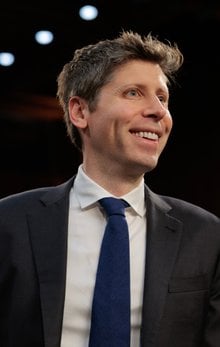
Sam Altman, CEO of OpenAI, told Business Insider in September: “When bubbles happen, smart people get overexcited about a kernel of truth.
“Are we in a phase where investors as a whole are overexcited about AI? My opinion is yes.”
Joe Tsai, Co-founder of Alibaba, cautioned: “I start to see the beginning of some kind of bubble... I start to get worried when people are building data centres on spec.”
However, Nokia’s CEO has recently denied concerns about an AI bubble, telling Reuters: “Even if there’s a bubble, a trough, we’ll look to the longer-term trends. And right now, all those trends are very favourable.”
In the interview with CNBC, he said Nokia was utilising the “AI supercycle” and is “continuing to innovate and continuing to build momentum”.
Company portals




Executives
Justin Hotard
President and CEO
Sam Altman
Sundar Pichai
CEO