
Why did Trump Pay TotalEnergies $1bn to Cancel Wind Plans?
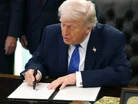
The Trump administration has reached an agreement with TotalEnergies that will see the French energy company halt construction of all new offshore wind projects in US waters, with the government reimbursing nearly US$1bn in lease fees from taxpayer funds.
The Paris-based firm had been planning two wind farms on the Eastern Seaboard: one off the coast of North Carolina and the other off the coast of New York.
Neither of these sites will now be completed following the settlement, which represents one of the most significant reversals in US renewable energy policy in recent years.

Since his second term began, US President Donald Trump has targeted wind energy development with renewed vigour.
He called turbines "losers" during his address at the World Economic Forum in January 2025.
One of the first executive orders he signed upon his inauguration called for the indefinite cessation of all wind farm approvals, though this was largely blocked by federal courts.
A subsequent move to pause leases for five major projects already under construction on national security grounds was similarly met with preliminary injunctions, allowing work to proceed.
The agreement with TotalEnergies marks a different approach, targeting projects early enough in development that there is no construction to protect.
TotalEnergies' strategic shift
TotalEnergies entered the US offshore wind market in 2022, acquiring two leases: one at Carolina Long Bay and another at the New York Bight.
Together, the projects had a combined planned capacity of 4 GW, with the New York development scheduled to come online in 2029 and the Carolina project in 2031.
Under the terms of the settlement, the company will relinquish both leases and commit to investing an equivalent sum – nearly US$1bn – into US gas and power infrastructure.
That includes financing the construction of the 29 Mt Rio Grande liquefied natural gas (LNG) plant in Texas, expanding upstream oil operations in the Gulf of Mexico and pursuing shale gas development elsewhere in the country.
The shift reflects broader uncertainty in the offshore wind sector, where developers have faced rising costs, supply chain constraints and regulatory challenges in recent years.
TotalEnergies Chair and CEO Patrick Pouyanné was unambiguous in his support for the deal.
"Considering that the development of offshore wind projects is not in the country's interest, we have decided to renounce offshore wind development in the United States, in exchange for the reimbursement of the lease fees," he says.
"These investments will contribute to supplying Europe with much-needed LNG from the US and provide gas for US data centre development. We believe this is a more efficient use of capital in the US."
The company has also separately signed a Letter of Intent with Glenfarne, the lead developer of the Alaska LNG project, for the long-term offtake of two million tonnes per year over 20 years.
Industry and government response
Interior Secretary Doug Burgum offered a defence of the deal. "Offshore wind is one of the most expensive, unreliable, environmentally disruptive and subsidy-dependent schemes ever forced on American ratepayers and taxpayers," he says.
Elizabeth Klein, former Director of the Bureau of Ocean Energy Management under the Biden administration, warns that scrapping the New York project in particular – a region already facing an electricity shortage – was counterproductive. "For the current administration to be cutting that off makes no sense at all," she says.
Sam Salustro, SVP of Policy & Market Affairs at the Oceantic Network, describes the payment as political theatre at consumers' expense. "Paying to remove affordable, homegrown energy out of the equation leaves American consumers struggling to pay their electricity bills," he says.
Industry analysts have noted that the deal could set a precedent for other developers seeking compensation, potentially creating significant fiscal implications for the federal budget.
Potential implications for developers
The leases for undeveloped offshore wind projects across the Atlantic, Pacific and Gulf coasts carry a combined value of more than US$5bn.
RWE, the German renewables company that paid more than US$1.2bn for three leases off New York, California and the Gulf of Mexico, has stated its expectations regarding reimbursement.
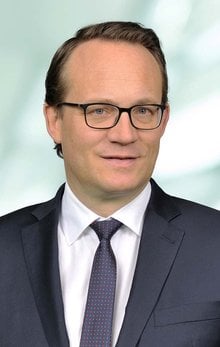
"If we never get the right to build the plants, I assume we'll get the money we've already paid back. And if necessary, through legal action," RWE CEO Markus Krebber says at a recent press conference.
The Interior Department did not respond to requests for comment on whether further negotiations are under way.
For TotalEnergies, a company that exported 19 million tonnes of US LNG in 2025, pivoting from offshore wind into gas and oil represents a shift in its US strategy.
The company's integrated fossil fuel portfolio positioned it to offer the administration investments in exchange for the reimbursement.
Company portals




Executives

Liz Burdock
CEO
Markus Krebber
CEO
Patrick Pouyanné
Chairman and CEO