Why Unilever is Considering the Sale of its Food Brands
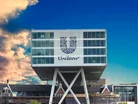
British consumer goods manufacturer Unilever has been exploring a major portfolio restructuring that could see its Foods division acquired by US-based McCormick & Company.
The move represents a significant strategic pivot for the multinational corporation as it continues efforts to streamline operations and focus its business model following the 2025 demerger of The Magnum Ice Cream Company.
The UK-headquartered company has confirmed receipt of an inbound offer for its Foods business and has been engaged in discussions with McCormick regarding the potential transaction. However, Unilever has cautioned that there can be no certainty that any agreement will be reached between the two parties.
The Foods division, valued at €12.9bn (US$14.92bn), encompasses major brands including Hellmann's mayonnaise, Knorr stock and seasoning products, Marmite and Horlicks.

Strategic portfolio optimisation
According to a report by Bloomberg, it's suggested that Unilever has been in the preliminary stages of evaluating various options for separating its food assets. The company could potentially spin off the entire business, or alternatively retain certain flagship brands while divesting the remainder of the portfolio.
The report states that any transaction may not materialise before 2027, indicating this could be part of a longer-term strategic repositioning.
This potential divestment follows a broader trend within the consumer packaged goods sector. According to McKinsey, many manufacturers in this space have been experiencing softening demand in legacy categories, whilst consumers have been trading down, reassessing brand loyalty and changing their purchasing behaviours and channels.
Financial performance and market dynamics
Hellmann's mayonnaise alone accounts for nearly €3bn (US$3.45bn) of the Foods division's value, whilst Hellmann's and Knorr combined represent 60% of Unilever's food sales.
According to Unilever's 2025 Annual Report, the Foods portfolio declined by 3.2% compared to the prior year, impacted by adverse currency movements, though this was partially offset by 2.5% underlying sales growth.
Heiko Schipper, Business Group President of Unilever's Foods, says: "We delivered a solid performance despite slow markets, driven by innovation in our Power Brands and by stepping up gross margin through a simplified and sharpened portfolio."
The scale differential between the two companies presents an interesting dynamic. Unilever reported €50.5bn (US$58.4bn) in total turnover for 2025, with a market capitalisation of US$137.53bn.
In contrast, McCormick, which owns brands including Cholula, Frank's RedHot, French's and Schwartz, has a market capitalisation of US$14.51bn.
McCormick's strategic approach
McCormick acknowledged that discussions with Unilever remain ongoing, whilst emphasising that no certainty exists regarding whether a transaction will be finalised.
The American food company stated that it regularly evaluates its portfolio and strategic options in pursuit of maximising shareholder value, consistent with its fiduciary duties and in consultation with its financial and legal advisers.
The potential acquisition could represent a transformative growth opportunity for McCormick, significantly expanding its portfolio and market presence.
For Unilever, the divestment could provide capital for reinvestment in higher-growth categories whilst allowing management to concentrate resources on core business areas that align more closely with its strategic direction following the ice cream demerger.
Executives
Heiko Schipper
President of the Foods Business Group