American Airlines Refuses United Airlines’s Merger Idea
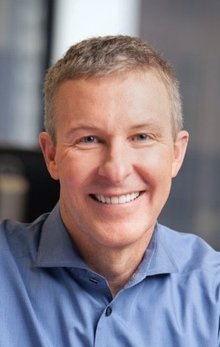
United Airlines CEO Scott Kirby has criticised American Airlines for refusing to consider a merger between two of the US’s largest airlines.
In a company statement, he says that the combined company would have “created tens of thousands of new high paying, unionised jobs with great benefits which would have led to even more career growth opportunities”.
Scott argues that a merger would have reinforced the American aerospace industry and created an airline capable of competing globally.
“I was hoping to pitch that story to American [Airlines], but they declined to engage and instead responded by publicly closing the door,” Scott says, who was previously President of American Airlines before his departure in 2016.
“Without a willing partner, something this big simply can't get done.”
United Airlines’s failed pursuit of American Airlines follows the recent geopolitical fallout brought on by conflict in the Middle East, with anxiety over profits among aerospace companies growing across the industry.
In response, this month United Airlines cut its annual profit forecast while American Airlines reported US$400m in additional jet fuel costs for Q1 2026.

A global powerhouse in the airline industry
In a company statement earlier in April, American Airlines – who holds an US$8bn market capitalisation compared to United Airlines’s US$30bn – said that a merger would be “negative for competition and consumers” and “inconsistent with our understanding of the [Trump] Administration’s philosophy toward the industry and principles of antitrust law.”
Talks of a merger saw scepticism from analysts across the industry, who point to the potential stranglehold the combined airline would have over several travel hubs throughout the US.
Savanthi Syth, an analyst at Raymond James, discusses the positives and negatives that could come from a theoretical merger, saying that that the merger would be “great” from a shareholder’s perspective.
She also adds that marrying American Airlines’s experience with Latin America and UK flights with United Airlines’s strength in the Pacific and continental Europe could create a “global powerhouse”.
However, Savanthi acknowledges the market challenges that both airlines could face following a merge, saying: “From a regulatory point of view, you’re making an airline that’s twice as big as any of its competitors and about 40 per cent of the US market,” and that even with concessions to regulators, it would “still be politically tough to get it across the line”.
Merging companies for growth
Kirby pitched the merger during a meeting with the Trump administration on 25 February, in hopes that the combination would create a global airline to compete with foreign rivals.
President Trump vocalised his feelings against the idea in an interview with CNBC on 21 April, saying “American [Airlines], it's doing fine, and United [Airlines] is doing very well” and that he doesn’t like the prospect of a merger between the two.
In Scott’s statement, he says the merger would allow consumers to travel to more locations, create more customer and shareholder value for both airlines, establish a globally competitive airline and strengthen the US economy and aircraft manufacturing industry with “millions” of new jobs.
He addresses industry scepticism and discusses how the merger isn’t part of a plan for financial aid but for growth: “Since previous mergers have been about saving struggling airlines, previous legal and regulatory reviews have always focused on subtraction and what's being lost.
“But, a different kind of merger proposal – one that's focused on growth, customer investments and global competitiveness – would have been a different proposition altogether.”
American Airlines recorded a net profit in 2025 of US$111m – down 87% on the previous year – compared with United Airlines’s 2025 net profit of US$3.4bn.
Discussing American Airlines’s decline in profit, Savanthi adds that while the company “needs to improve its finances”, it is not financially struggling.
Company portals

Executives
Scott Kirby
CEO