Elon Musk and Sam Altman Head to Court Over OpenAI’s Future
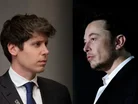
Following a public dispute over OpenAI’s profit status, the three-year long legal battle between Elon Musk and Sam Altman is preparing to go to court with the jury selection process currently underway.
In a public announcement on X in 2023, Elon, who helped co-found OpenAI in 2015, alleged that Sam had broken the company’s founding agreement by restructuring it into a for-profit enterprise after it was agreed the company would be a nonprofit.
The lawsuit claims that after Elon had invested millions of dollars into the AI firm, he was “betrayed by Altman and his accomplices” as they, along with Microsoft, “established an opaque web of for-profit OpenAI affiliates, engaged in rampant self-dealing”.
OpenAI has responded to Elon’s claims, calling them “baseless” and a “harassment campaign that’s driven by ego, jealousy and a desire to slow down a competitor”, in an April post on X. It added that Elon was originally on board with the for-profit move but wanted to merge OpenAI with Tesla and become CEO.
The post adds that when Sam and OpenAI’s President Greg Brockman wouldn’t agree to his terms, Elon cut ties with the firm and went about forming his own AI company.
The case carries considerable stakes for OpenAI, which is expected to announce its IPO later this year at a US$1tn valuation. If Elon wins the lawsuit, he could receive up to $134bn in damages, which he says will be redistributed to OpenAI’s nonprofit arm.
Jury selection for the case has begun in the US District Court for the Northern District of California. Opening arguments are expected to begin on 28 April.
A soured partnership
Along with several tech entrepreneurs, Elon, Sam and Greg first founded OpenAI in 2015. Sam, while a notable figure in Silicon Valley at the time, didn’t carry the same level of influence in tech he does today.
In hopes to secure investment in his AI project, Sam emailed Elon, a figure he once cited as a “hero” of his in 2023, and discussed the possibility of both tech leaders spearheading the advancement of AI development.
Sam, Elon and other founders launched OpenAI that same year as a nonprofit and began seeking AI researchers to work on the programme.

Despite a close-working relationship, the partnership between the two soured, with Elon unhappy over the company’s pace of growth and, after a failed bid to gain control of the company, Elon left OpenAI’s board in 2018 and ceased funding the AI firm.
Following his departure, OpenAI launched ChatGPT and raised billions of dollars from Microsoft, establishing it as one of the world’s most valuable private companies.
As OpenAI secured more investment in 2025, the startup gained final approval from regulators to restructure its main business into a for-profit corporation, nested inside a nonprofit foundation.
With this structure, the OpenAI foundation has legal control over a public benefit corporation called OpenAI Group, which is free to raise funding or acquire companies without legal restraint.
Potential rollback of for-profit status
The lawsuit is expected to run through mid-May and the jury’s verdict will only be advisory, with the ultimate decision down to US District Judge Yvonne Gonzalez Rogers.
Judge Rogers has opted to divide the trial into two parts: a liability phase to decide if any wrongdoing occurred and a remedies phase to determine the appropriate damages and next steps.
Jury selection will be followed by opening arguments, with attorneys for Elon and OpenAI allotted a total of around 20 hours each to present their case and attorneys for Microsoft allotted a total of five hours, according to a court filing.
All three parties submitted a list of witnesses they can call on – Musk, Altman, Brockman and Microsoft CEO Satya Nadella have all been named.
If OpenAI is found liable, Judge Rogers will hear arguments for the remedies phase, which is expected to begin on 18 May.
“However, if the jury finds that Musk failed to file his action within the statute of limitations, it is highly likely that the Court will accept that finding and direct verdict to the defendants,” Judge Rogers said.
If the defendants are found liable, Judge Rogers will be tasked with ruling on potential remedies, which could include forcing OpenAI to roll back its for-profit transition.
Elon requested the use of jurors in the trial and Judge Rogers said she would appoint nine advisory jurors with no alternates.
Each juror will be drawn from San Francisco and several surrounding counties, an area that includes many tech workers as well as critics of the industry and AI.

Executives
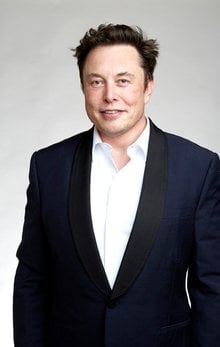
Elon Musk
Tesla CEO
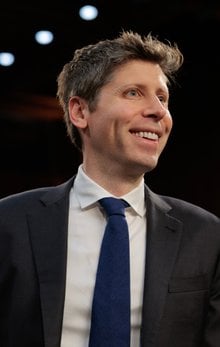
Sam Altman