
Inside Alibaba’s CEO-Led AI Task Force Initiative
Following the resignation of Qwen Division Leader, Lin Junyang, Alibaba has announced a new foundation-model task force to further develop its AI initiative.
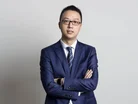
The new foundation-model task force was implemented by CEO Eddie Wu, who plans to head the company’s AI strategy to scale cloud and AI investment, and focus on strategic talent recruitment to expand its workforce.
As a result of the new initiative, Alibaba has restructured its entire AI division, giving direct control over to its top executives.
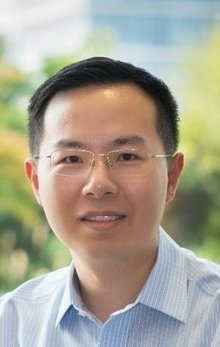
Zhou Jingren, Chief Technology Officer for Alibaba Cloud, will maintain his position at Tongyi Laboratory, the research division responsible for Qwen AI model development. He will manage existing projects and new developments for the task force.
Qwen, Alibaba Cloud’s family of open AI models, remains one of the company’s key AI initiatives, standing out in the open-source community for its advanced deep research, image generation and ease of implementation.
Discussing Alibaba’s AI strategy, Eddie says: “In technology, standing still means falling behind. Advancing foundation models is a core strategic priority for our future.
“While continuing to uphold our open-source model strategy, we will further scale up investment in AI research and development, and accelerate the recruitment of top talent. Let's rise to this challenge."
An industry-leading approach to AI
With China’s AI industries predicted to grow more than CN¥10tn (US$1.4tn) in value by 2030, AI models are rapidly becoming a competitive advantage for companies across industries.
The restructuring at Alibaba follows company plans to turn Qwen into a more dynamic system, with goals to implement it into everyday features like wearable technology and AI agent software for customer service.
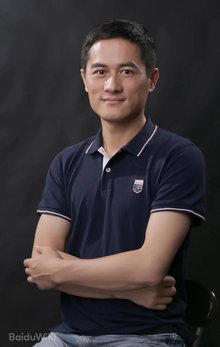
With Alibaba’s CEO and its highest-ranking technology executives Zhou Jingren and Group Chief Technology Officer Wu Zeming in charge, the company is ensuring the most senior tech roles are in direct control of model development and integration.
Zhou and Wu will manage a loyal base of developers as part of their task force roles, providing the workforce and company partners with a solid leadership foundation, following a series of senior departures in 2025.
Discussing Zhou and Wu’s responsibility going forward, Eddie adds: “Jingren will continue to lead the Tongyi Laboratory and drive its ongoing initiatives.
“Additionally, the company will establish a Foundation Model Task Force, consisting of me, Jingren and Fanyu [nickname for Wu], who will jointly coordinate group-wide resources to accelerate foundation model development.”
Future-proof investment
Alibaba considers AI a core pillar of its operations, with AI products now accounting for more than 20% of its external cloud revenue.
Following Lin’s resignation, the company’s task force has been designed as a long-term strategic shift rather than an emergency reaction to staff departures.
The task force was devised to affirm Alibaba’s commitment to its open-source strategy and its CN¥380bn (US$53bn) investment plan for AI infrastructure.

The company plans to scale its research and development spending and increase its efforts to recruit more talent after the departure of several company engineers.
Alibaba, through its subsidiaries, provides marketing reach to help merchants, brands and businesses engage with users and customers, both in the People’s Republic of China and internationally.
It operates through several channels, including China Commerce, International Commerce, Cloud and Digital Media and Entertainment.
Going ahead, the company plans to triple its spending goals and following its CN¥3bn Lunar New Year holiday initiative, has recently offered users incentives such as leisure and dining experiences to attract new users to the Qwen AI app.
Company portals


Executives

Eddie Wu
CEO
Wu Zeming
Group Chief Technology Officer
Zhou Jingren
Chief Technology Officer