Inside Paramount & David Ellison's Fight for Warner Bros

Following an announcement from Netflix that it will acquire Warner Bros. Discovery’s (WBD) studio and streaming assets for US$82.7bn after a month-long bidding war with Paramount, Paramount CEO David Ellison is not giving up the fight.
On 8 December, Paramount launched a US$30 all cash offer to acquire WBD, equating to an enterprise value of US$108.4bn, according to the firm.
Speaking to CNBC’s David Faber on his “Squawk on the Street” programme, Paramount’s CEO opened by saying: “So look, we’re really here to finish what we started.”
He talked about the firm's “road” to this position, explaining that on 1 December Paramount made an offer to acquire WBD to its board and that, when the proposals were taken to WBD CEO and President David Zaslav, “he came back with a bunch of issues”.
Following this, Ellison said that on 4 December, his company sent a bid that “addressed every single one of them”.
Comparing the offer to Netflix’s offer, he added: “Our deal is pro-consumer. It's a pro-creative talent. It’s pro-competition.”
Paramount said in a news release on 8 December that the offer is backstopped with equity financing from the Ellison family, including father Larry Ellison, and the private enquiry firm RedBird Capital.
It’s also backed by US$54bn in debt commitments from Bank of America, Citi and Apollo Global Management.
Inside the offer
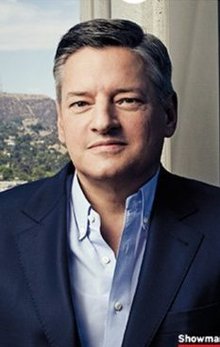
Unlike Netflix’s deal, which is headed by Co-CEOs Greg Peters and Ted Sarandos and acquires WBD’s studio and streaming assets, Paramount’s proposal is for all of WBD.
The firm's press release states this is “without leaving WBD shareholders with a sub-scale and highly leveraged stub in Global Networks, as the Netflix agreement assumes."
“We’re sitting on Wall Street, where cash is still king,” Ellison said in the interview with CNBC. “We are offering shareholders US$17.6bn more cash than the deal they currently have signed up with Netflix, and we believe when they see what is currently in our offer that that’s what they’ll vote for.”
Commenting on Netflix’s chance of regulatory approval, he said: “And when you fundamentally look at the marketplace, allowing the number one streaming service to combine with the number three streaming service is anti-competitive.”
Paramount's note to employees
In a leaked memo to employees, originally seen by Business Insider on 8 December, Ellison struck an urgent but optimistic tone, telling staff that Paramount’s offer was about transparency, scale and the future of US entertainment.
He said that the firm has taken the offer directly to shareholders as they “deserve full transparency and the ability to make an informed choice”, adding that the bid is “superior” to Netflix’s offer “across every dimension”.
Ellison added that it is a “higher overall value, greater certainty, a clearer regulatory path and a future that is pro-Hollywood, pro-consumer and pro-competition."

The CEO framed the pursuit of WBD as deeply rooted in Paramount’s mission: “Our motivation for pursuing Warner Bros. Discovery has been consistent from the start.
“We love this industry and believe deeply in its future. And we want to help preserve and strengthen one of America’s greatest cultural and economic exports: storytelling.”
Ellison argued that a merged Paramount-WBD would “accelerate both creative engines” and expand the company’s ability to deliver “exceptional stories” across film, TV, sports, news and games.
He also tried to reassure staffers wary of further consolidation. “Bottom line: this transaction is about doing more, not less,” he said, emphasising benefits “for our company, for the industry, for consumers, for shareholders, and especially for the creative talent who power everything we do”.
Company portals




Executives
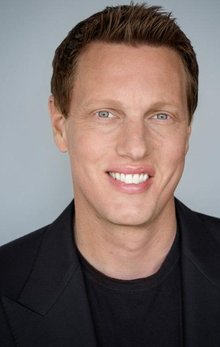
David Ellison
Chairman and CEO
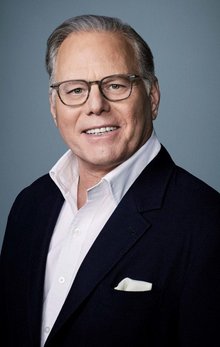
David Zaslav
CEO

Greg Peters
Co-CEO
Ted Sarandos
Co-CEO