
Iris Restaurant: Destination Dining, the Next Frontier
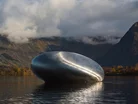
Anika Madsen is late for our conversation. But given her excuse, we’ll forgive her. After all, it’s not every day a 420kg bluefin tuna makes its way into your salmon farm and disrupts your day. Look closely at Anika’s culinary career or the love of nature and local ingredients that inspires her menu at Iris Restaurant, though, and you sense it’s a disruption she enjoys.
Iris isn’t like most restaurants. But that’s largely the point. Part luxury dining experience and part floating art installation, the Michelin-starred Norwegian destination is based on a remarkably rustic idea: bring diners who travel from all over the world on a journey to the ingredients. And educate them while doing so.
Its 18-course menu – designed to educate on global food systems, aquaculture, sustainability and our relationship with the natural world – is an expedition.
For many, that means catching multiple flights, taking ferry trips and enduring long car journeys to an unassuming dock in the picturesque small town of Rosendal. From there they are taken by electric boat to the Salmon Eye, a floating exhibition centre in the middle of Hardangerfjorden, to learn, experience and eat.
“It looked like a UFO, I was speechless the first time I saw it,” recalls Anika of her first encounter with Salmon Eye. She and her husband had travelled from their native Denmark to Norway to meet the Eide family, a name synonymous with sustainable salmon farming and innovative aquaculture practices.
Sustainability and aquaculture
In partnership with Kvorning Design, the Eides created Salmon Eye to host tours, exhibitions and cinematic art shows that shed light on the possibilities and challenges facing aquaculture and food production. Sebastian Torjusen, CEO of Salmon Eye, developed the idea of the restaurant in 2021, with Anika and her husband Nico joining the project in late 2022.
“The idea was simple,” says Anika, “if we’re going to talk about food and ingredients, why not showcase it with a restaurant and menu that educates, provokes emotions, and questions or changes our perceptions of food and sustainability?”

The same ethos that underpins Iris and Salmon Eye inspires Anika’s cooking. Growing up in the ‘new Nordic wave’ of cuisine, led by the likes of Noma and Claus Meyer, local ingredients and the natural environment are fundamental to her approach.
“It was very much a period of no rules, experimenting and embracing what’s around us,” she says. “That means being led by fishermen, greensmen and meeting with the local community to hear incredible stories and meet the people who have fresh produce in their hands.
“In Norway, we are surrounded by the best seafood in the world,” says Anika. “Around 70% of the world is covered by water, and yet we’re only eating 2% of what’s in it. There’s endless potential if we’re sustainable and nothing is more exciting than being in the middle of nowhere and being fascinated by what’s on your plate. This isn’t something you can Google or Instagram, it’s about experiencing the wild firsthand.”
Destination dining
At Iris, that involves journeying through the fjord, the mountains and the ever-changing elements to sample a menu that illustrates threats to the global food system and suggests how we may mitigate them.
“You start at the dock in Rosendal,” says Anika. “We take you on a short boat ride to a small island, where we sample local products in a restored boathouse. It’s a great way of connecting with each other, and with the environment around us.”
After, guests sail to Salmon Eye, where Anika and the team embrace experiential dining. “We play with light, sound and views to give a true sensory experience,” she says. “It starts with a cinema and art installation in darkness below water, before moving upstairs.
“There, guests eat at panoramic windows with incredible views over the fjords, the changing seasons and the powerful weather we experience in this part of the world. It creates the ideal backdrop for dishes that come directly from what’s outside the window.”
Iris’s menu – kept under wraps by Anika and the team – encourages a more considered approach to what we eat. “Our dishes can be provoking,” she says, “but that’s really important. I want to take that stiff, Michelin Star mindset and turn it on its head, bring people down to where they’re comfortable and feel responsible for what they’re eating. It’s all about challenges, flavours and possibilities.”
According to Anika, feedback to the experience ranges from harking back to long-buried childhood memories to, in one case, tears. “People come from around the world for very different reasons,” she says. “It really is an expedition and journey, and not an easy one. But there’s a real feeling people do it with purpose. I’m proud when guests leave with more questions than they came with.”
Company portals

Executives
Anika Madsen
Head Chef