
Is AI Behind Recent High-Profile CEO Resignations?

AI is having a major impact across the workforce, affecting employees, executives and now those in positions of leadership.
At the end of March, James Quincy is stepping down as CEO of Coca-Cola. He has recently said his decision to resign is influenced by the changing business environment and the role AI will play within it.
“My job is also to think who's the best team to put on the field to get the next wave done,” James said in an interview with CNBC. “And I concluded that, actually, it was time to put someone else on the field for the next wave of growth.”
Similarly, former CEO of Walmart Doug McMillon’s statement, following his departure in January 2026, mirrored James’s sentiment over AI’s influence on company leadership. Doug said he believed Walmart needed a new leader to effectively deliver and manage the company’s transition to AI.
“With what's happening with AI, I could start this next big set of transformations with AI, but I couldn't finish,” said Doug, announcing his decision to step down.. “About a year ago, I really started feeling like this next run, you could see what agentic commerce was going to look like, the vision for AI shopping.”
Replacing CEOs with AI
These resignations from two of the US’s largest companies reflect a changing tide on the view of AI in leadership.
Co-founder and CEO of OpenAI Sam Altman suggests that AI systems could be used to replace even those at the leadership level.
In an interview with the MD MEETS podcast, Sam said: “I think there will come a time when AI can be a much better CEO of OpenAI than me – and I will be nothing but enthusiastic the day that happens.”
He discussed how AI could be used for more efficient executive decision-making, remove personal burnout and lifestyle strain and explained that running a company could theoretically be done through the use of automated systems.
“[AI] doesn’t scare me, it doesn’t make me sad, it’s just like I did this one thing that has been automated and I wanted it to be automated and that’s kind of what we’re doing,” he added.
While the days of a CEO being fully replaced by AI automation are still some way off, other CEOs in the tech industry are looking to the technology as a way to enhance the efficiency of existing operations.
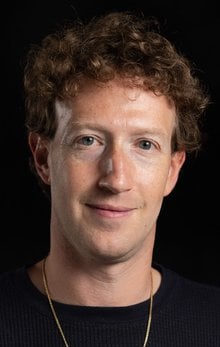
For example, CEO of Meta Mark Zuckerberg is adopting AI at the executive level through the use of an agentic AI tool to streamline CEO workflow decision-making.
This experiment remains one of the first attempts by a major tech company to improve leadership with AI, suggesting that organisations are continuing to find new ways to improve upon business decision-making, strategy and management, not just for software development or customer service.
Automation creating layoffs
As top executive and leadership positions prepare for the arrival of AI, entry-level workers face greater problems over its integration and in some cases, replacement.
In May 2025, Anthropic CEO Dario Amodei suggested AI could replace 50% of the world's white-collar workforce in the next five years. He added that administrative task work like in consultancy and financial services could be wiped out as CEOs are looking to use AI to reduce costs.
“Specifically, if we look at jobs like entry-level white, you know, I think of people who work at law firms, like first-year associates, there's a lot of document review. It's very repetitive, but every example is different. That's something that AI is quite good at,” Amodei said.
“I think, to be honest, a large fraction of them would like to be able to use it to cut costs to employ less people.”

The future of leadership
In 2025, AI was cited as a reason for more than 54,000 layoffs according to a report by consulting firm Challenger, Gray & Christmas. However, this doesn’t account for how AI is affecting the employment of those in charge.
While some CEOs cite the need for a refresh in leadership as AI growth continues, some in the industry believe that the reason is down to investor input.
Dirk Jenter, Professor of Finance at the London School of Economics and Political Science, suggests CEOs are leaving because investors believe some CEOs can’t deliver on promises offered by AI.
“Investors are not necessarily super patient,” Dirk says. “They see billions being spent on AI investments, and they see sort of very little in short-term return on investment, and that puts a lot of pressure on company leadership.”
As CEOs highlight concerns around their leadership of an AI workforce, leadership positions are seeing rapid turnovers.
In 2025, companies in the S&P 1500 named 168 new CEOs, the highest total in more than 15 years.
Already in 2026, the CEOs of several companies like Lululemon, Disney and Target have stepped down, including Adobe CEO Shantanu Narayen, who also stated the need for new leadership under AI growth as the reason for his departure.





Executives

Dario Amodei
CEO and Co-Founder
Doug McMillon
President & CEO

James Quincey
CEO
Mark Zuckerberg
CEO

Sam Altman